Thursday, July 13, 2006

The best TBR pile ever


What’s better than a book store? A book museum! I just spent two hours in the newly renovated Pierpont Morgan Library in New York City and what a blissful two hours it was!

Mr. Morgan was a man who knew how to treat a book; he built an Italianate marble villa (designed by the famous architect Charles McKim) on the corner of Madison Avenue and 36th St. just to house his magnificent collection of books, prints, and manuscripts.

The building alone is worth the trip. Morgan’s study looks just as it did when he worked there. It breathes wealth from the sixteenth-century coffered ceiling shipped in pieces from Tuscany to the red silk damask covering the acres of wall.

The East Room is breathtaking with three levels of glass fronted book cases decorated with inlaid wood and bronze latticework. A tapestry that would cover the entire front of my house hangs over the fireplace. The ceiling has leaded glass skylights which illuminate the brilliantly painted vaults and corbels and cornices.

Of course it’s the books that matter. The Library owns not one, not two, but three Gutenberg Bibles, the first book printed with moveable type. Two were on display and it was awe-inspiring to see where the whole modern publishing business started back in 1455.

What I really love though are the hand-written manuscripts. Seeing the paper and ink touched by Thoreau, Galileo, and Mozart is beyond wonderful (although Lord Byron complained that copying over Don Juan was an intolerable bore). The teenaged Brontës wrote in such tiny letters that I couldn’t read their words at all. Elizabeth Barrett Browning’s Sonnets from the Portuguese were also illegible because she wrote in a scratchy scribble in faint brown ink. Jean-Jacques Rousseau, on the other hand, had handwriting that was beautiful and easy to read, even though it’s in French.

Did you know that Edgar Allan Poe wrote on little sheets of paper and then stuck them together with sealing wax? A Tale of the Ragged Mountain makes a scroll twelve feet long. My daughter commented that he must have driven his publisher insane.

I was amazed to discover that Jane Austen wrote an epistolary novel titled Lady Susan when she was nineteen years old which wasn’t published until well after her death and then only as an appendix to a memoir. As one might expect, she had very elegant and legible handwriting.

Oscar Wilde was one of the first major authors to compose on a typewriter (which came into wide use in the late 1880s). Yet it’s fascinating to see his handwritten revisions on the typed manuscript.

I could go on and on but this is a blog after all and not supposed to take your entire morning to read. So I’ll just close with a comment by Charles Dickens which proves that writers and writing have not changed a bit over time. On display were his notes for Our Mutual Friend, including a chapter by chapter outline of the plot. At the end he had written simply, “Wind up the Book as skillfully and completely as I can.”

Isn’t that what we all try to do?

Tuesday, July 11, 2006

The Italian Connection


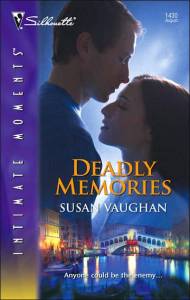
Benvenuto al Italia! Welcome to Italy in my next Silhouette Intimate Moments release in August. Deadly Memories is the last (for now) in my series about the men and women of the Anti-Terrorism Security Agency (ATSA). The hunt for stolen uranium and their personal searches take my characters to that ancient land of extravagant food, wine and people. As you can tell from the title, Deadly Memories, my characters' memories were not pleasant. Jack's deadly memories focus him on vengeance. Sophie's memory of a villain's deadly intent could get her killed—before she can recall his secrets. As they drive mountain roads and hide out in remote villages to escape the villain, they find beauty and warmth as well as passion and danger.
My memories of a trip to Italy years ago are much more pleasant. Those and my research helped me to indulge myself with Italian culture and lore. I steeped myself in the language and history, architecture and scenery as I created villas and villages. Of course, I had to sample the wine and recipes that accompanied my characters' journey from Venice to Tuscany. Here is one of the recipes I found delicious as I ate—um, worked my way through the story.

Pollo Al Mattone, or Tuscan Pressed Chicken

1 small chicken, split down backbone; or 4 deboned chicken breasts
Juice of 1 lemon
1 tablespoon chopped fresh sage
1/3 cup olive oil, plus more for basting
Salt and pepper to taste
1 lemon, sliced for garnish

Press the chicken to form a uniform thickness, as flat as you can. Marinate in lemon juice for 30 minutes, turning after 15 minutes. Remove the chicken and discard the juice. Rub the chicken on both sides with olive oil. Sprinkle with salt, chopped sage, and lots of freshly ground black pepper. Heat olive oil in an iron skillet over medium heat. When it is hot, add the chicken and place a weighted lid on top of the chicken. Cook for approximately 55 minutes, turning 3 or 4 times and basting with pan juices. Cut the cooked chicken into pieces and serve immediately. If using deboned chicken breasts, cut cooking time in half. Garnish with lemon slices.
Buon appetito!

Susan Vaughan

Friday, July 07, 2006

Vacation--Mythbuster Style

I just turned in a manuscript that was overdue. My editor let me know she is going on vacation, so will not be able to read it for a while. No biggie. I just wanted it turned in, I knew it would have to fit in her schedule, and summer is prime vacation time.

So...now I'm stuck on the word vacation. I cheerfully wished my editor a happy vacation (because I'm not the begrudging sort...usually), but while I did so, I thought about the last time I took a real vacation (meaning no work, no how, no way). It was for my 25th anniversary, when my husband and I went--without children (who bring a whole new meaning to the work/vacation combo)-- to Jamaica (okay, so I wrote a short article...but that took under thirty minutes and I did it hanging in a hammock and drinking something with an umbrella in it).

I realized with dawning horror that I have thoughtlessly begun to tack the name vacation on to any extended trip away from home. I've taken eight vacations already this year--so why am I so tired and feel like I could use a good...vacation? Let's see: Going to a conference in New Orleans? Vacation. Driving 24 hours down to my father's memorial service, and 24 hours back, broken up by several days in hotels, brake failure, a blown tire, and three days at my mother-in-law's house? Vacation. Vacation. Vacation. A 36 hour drive--one way--for a family wedding? Vacation.

Accompanying me on vacation is not only my trusty VISA, but my ever present 'bag o'work': current manuscript on my Alpha Smart, check; manuscript to be revised--along with sticky flags and 3x5 cards, check; work in progress for my students, check. When my family sees me, no one asks if I brought work along, the question is how much.

Which brings me back to my editor. I hope that her vacation will be the kind I used to mean when I said vacation. (no work, no way, no how).

I also hope I take a real vacation sometime soon--and not the one I just told my husband I was taking next week that is going to include such fun and exciting events as cleaning the house from top to bottom, and catching up on the student work I'm behind on (I'm taking a vacation from sitting at the computer all day, trying to get revisions finished, but is that a real vacation?).

I have to wonder why, as a writer, I've become so lax with such an important word. I don't think I'm the only one (the only people I know who don't take work on vacation are those who don't have portable work). So, I'm here to officially spread the word--it's time to take vacation back, before we lose it all together. Those Europeans are smart folk, taking weeks to kick back and do nothing (even if the thought is inexplicably giving me a panic attack...excuse me a moment while I deep breathe at the mere thought of doing nothing but enjoy the beach).

Okay. Hyperventilation interlude over. I mean it. From now on, when I say I'm on vacation, I'm not taking along the bag o' work...stop laughing!

Wednesday, July 05, 2006

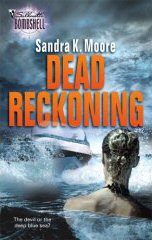
Behind the Book -- Dead Reckoning

Most writers have an interesting anecdote about each book -- we live with our stories for months at a time, after all -- but my second book, just out this month, is a little different.

To some extent, I live it.

Granted, the heroine of Dead Reckoning is a charter captain (I am not) and is out to save her sister (I have a brother who doesn't need saving) and is an engineer (definitely not me). Plus, she goes haring off on her adventure with a couple of hunky DEA agents (nope) and owns a Ruger 9mm (I wish).

But in everything else -- her living aboard a motor yacht, her willingness to crawl into an oily bilge, her fondness for the yacht engines she's called Hortense and Claire -- I'm there. (Mine are Wallace and Gromit, starboard and port, respectively.)

A natural romance has sprung up around boats courtesy of advertising and movies. If you've ever picked up Yachting magazine, you'll have been assaulted by glossy ads for gorgeous vessels whose owners never see the inside of an engine room. (My engine room is under the sofa and chair.) And movies, unless they're disaster films, never give you a chance to glimpse "under the hood," as it were. The most memorable boating scene I've ever seen on the big screen is Bing Crosby simultaneously steering the True Love, smoking a pipe, and crooning to Grace Kelly.

So because I write for Bombshell, a series which gives authors a little more leeway when it comes to exposing the nitty-gritty, I decided to reveal the reality of boating as I know it. You know, like just how loud a pair of Detroit Diesels can be, and how a pinhole leak in the downstream exhaust system can kill you. My poor heroine survives a couple of nasty experiences aboard her beloved Obsession; one character almost dies; another character does die.

But is boating and boat ownership full of danger? Not really. Common sense carries the day, as it does in all things. Mostly it's a matter of being aware and remembering your high school chemistry and physics lessons.

The Number 1 question I'm asked when people find out I live aboard is, "What about the space?" True, there's not much of it. My dSO and I live on a 38-foot motor yacht with two cats, and that's just about right for people who don't own much "stuff." In fact, leaving behind the "stuff" has been as much of a spiritual exercise as a mental or physical one.

We have a simple rule: When something comes aboard the boat, something else has to leave it. I make great use of our local library. My dSO downloads out-of-copyright books into his PDA. I've hung on to my power suits in case I have to go back to work in a corporate environment, but live mostly in shorts and t-shirts. My "keeper shelf" might as well be nonexistent, as it's only about two feet wide. Most books I purchase get donated to the library or shipped to my ravenous reading friends.

So is there really romance in boating? Absolutely!

In the spring, I went sailing with some friends in their sailboat and encountered a dolphin pod that played around us for two hours. Anchored out at night in a quiet cove with no one but black-crowned night herons for company is magical, especially with the phosphorous glow of sea creatures gleaming in the water. Daybreak on the water feeds the soul, as does sunset.

But between the dawn and the dusk lie the impellers that need changing, the fuel filters that need cleaning, and the heady, intoxicating scent of varnish. Would I trade any of that for the privilege of having someone else captain my vessel?

Not a chance.

Endless Summer

Yesterday, I was thinking about when I was a kid, remembering how summers seemed endless and there was always an adventure just waiting. The neighborhood was filled with other children my age and we did all kinds of things together. We played baseball in the empty lot, explored what we thought was a forest (it wasn't), caught grasshoppers and put on a show with them. There was capture the flag and Simon says and red light, green light and a million other games. Sometimes we just sprawled on the grass and watched the clouds, sharing what we thought they resembled--there were dragons and bears and so many other things.

When I compared those summers to this one, the difference was glaring. Everything now is a race, and judging by the speed people drive at and their impatience, I'm not the only one who feels that way. I work full time, so there's my day job sucking up time and I had a novella and a book due in June and spent every waking moment I wasn't at work writing. I turned in both projects on time and collapsed.

Maybe that's why I spent the fourth thinking about how nice it would be to just take time to sit back and watch the clouds roll by. No stress, no pressure. No place to be, nothing in particular to do. No day job, no bills. Just living life and enjoying it.

Then I remembered a quote from somewhere. I did a search online, trying to find to whom I should credit the line, but I didn't turn up any answers. It's wonderful advice, though, no matter who said it.
Life is an adventure; live it.
I'm as guilty as the next person when it comes to forgetting to appreciate the small things, but I'm going to try to do better. That's my Independence Day resolution.

There's another line I love, this I can credit without looking it up--it's from Ferris Beuller's Day Off.
Life moves pretty fast. If you don't stop and look around once in a while, you could miss it.
I don't want to miss it. I want to live to the fullest so that when I'm old, I can look back and say, yeah, it was a kick. My favorite thing to sign in books is: Always pursue your dreams. I'm a big believer in this and I think it ties in to living life, to enjoying it. I'm trying to find balance right now so that I do things other than write and sleep. Last week, I joined Net Flix and I want to take an art class. I just need to find one for someone with no artistic talent. :-)

What's your dream? What are you doing to pursue it? And any advice for me on how to slow down and enjoy the small things? That's going to be a tough one for me.

Patti O'Shea
www.pattioshea.com

Tuesday, July 04, 2006

Love Independence Day? Hug a Writer!

My apologies to those who live outside the United States and do not celebrate...

To all else--Happy Fourth of July!

I hope, as we all enjoy our American traditions of parades, cookouts and fireworks, that we stop a moment to realize that the Declaration of Independence, signed on July 4th, 1776, was created by Thomas Jefferson--farmer, future president, and writer. The colonists were grumpy at the way King George and his representatives felt that they had the moral/ethical/imperial right to ignore the colonists's stated concerns about their own governance. I can imagine many gripe sessions around colonial tables (having lived through many similar gripe sessions about the political whims of my own era). But Jefferson took these gripes, distilled them to the most flagrant and egregious of the King's sins, and then presented them to be signed by a group of men who knew that by signing the document, they were committing to living free from England's rule, or dying under her boot heel.

The Declaration was not the first document to change the political winds. In our European history, the Magna Carta came first. And the Rosetta Stone was writing that changed the world and opened our eyes to writers of cultures long ago forgotten. The Bible spread from one small area in the Middle East around the world. There are more, but I want to focus on the documents that have created the United States of America: The Declaration of Independence, The Articles of Confederation, and The Constitution.

These are the keys to the United States of America and its commitment to freedom. They have been captured in the written word for all the world to see. One of the important keys, perhaps the most important is our constitutional guarantee to freedom of speech, and the corollary free press. Without a free press we might live in a one-note world (decided by the government du jour). With that free press, we live in a world where information, misinformation and hyperbole comes at us in a steady stream (this post included). I tend to believe the Founding Fathers decided on the necessity of a free press somewhere between signing the Declaration and ratifying the Constitution (a document authored by committee, not by one man). It was, after all, easier to agree that George's way was wrong than it was to decide the "right" way to proceed. It took almost eleven years to get the constitution written and ratified (and we still had to amend it several times over). Yes, there were many points of view expressed (in reason and in rhetoric). But the expression of those views were what made the Constitution what it was--lean and strong and revolutionary in the rights it vested in We the People.

The Founding Fathers (for all their flaws, like forgetting about women and allowing slavery to continue) knew one thing clearly, government works best when it is by the people for the people. There's a reason that Presidents and Congressmen serve short, fixed terms and are up for reelection. And that's why freedom of the press is a constitutional guarantee. Which includes those presses that publish the novels we love to read and some of us love to write. So you may not like erotic romance, or you may prefer that your love story always have a happy ending--great! There will be a book for you on the shelf because of the freedom of press (and those books you don't like? they'll be on the shelf for those who do).

Every writer knows when she/he takes up the pen that the written word makes one more visible than may be wise, and more vulnerable. Our prejudices become bared in our manner and method of telling a story (Jefferson's prejudices are discernible in the Declaration and the Founding Father's themselves reveal so much in the papers they left behind). The truth in our hearts, and the little lies we tell ourselves are captured there, too. Sometimes a pet dies (and the letters of protest flood in), sometimes a burden in life is lifted or eased in a wonderful way (and the letters of joy flood in). Sometimes the inspiration is ineffable and unspoken. Sometimes it changes the world.

So while you're celebrating the birth of the United States, hug a writer for carrying on the 230 year old tradition of Jefferson, even if he or she doesn't write the kind of book you like to read (and then go buy a book by a new writer you think you just may enjoy reading).

Monday, July 03, 2006

Where have all the authors gone?

How many of us thought `If I could just publish one novel, my career would be on its way’? Sadly, as many of us have learned, that is not the case.
I recently browsed through my 2000 membership directory for my local romance writers’ chapter and discovered of the 23 authors listed as published in 2000, more than half of them have not received a publishing contract in at least three years. Most of those authors have not had a new book out in many years.
Why? This is a perplexing problem. Because I’m not a close friend to several of them, I don’t know the answers.
For many, though, the line they wrote for folded and they have not been able to transition into another type of book. Think about it. They lost their editor, lost the line for which their writing "voice" was suited, and have to compete against established authors at other lines. In addition to all of this, they have lost their power to attract agents.
For others, writing was a hobby they sandwiched around professional careers and never intended their books to be the focus of their lives.
A few of the authors in my group were forced to push their writing aside because of personal crises.
I suspect many of the authors were dumped by their publisher for a variety of reasons ranging from weak sales to incompatibility with their editor. Another reason for an author losing her publishing home is the perennial "cutting back" that occurs at publishing houses.
Just like the recording industry’s "One Hit Wonders," we have those in publishing, too. And just as mystifying as in the music biz, we don’t know why that author – often award-winning – can’t repeat her former success.
But I can’t explain why some authors’ once-strong careers fizzle. The closing of the door on Harlequin’s Temptation line has seemingly stifled the career of one of the most solid, professional writers I know. This author (formerly of my local chapter) published about 40 books for Harlequin and was a three-time RITA finalist. Why in the heck is she no longer publishing?
Granted, there are hugely popular authors like Loretta Chase and Laura Kinsale who take a hiatus from their highly successful careers.
But what – to me as a writer – is really scary is taking a look at the list of past RITA winners at the Romance Writers of America website (www.rwanational.org) and see how many of those names are no longer in publishing.
Hopefully of few of those supremely talented ladies were forced by publishers (because of low sales numbers) to take a pseudonym. That actually happened to the now-New York Times best-selling author Sabrina Jeffreys, who will no longer use her real name in any of her publishing information – even on writers’ loops.
We have two PASIC members (Bonnie Edwards and Gerry Bartlett) who went five years between publishing contracts and just this year reinvented themselves in hot new genres where their publishing careers look very bright.
But for every Bonnie and Gerry, there are many more who will never be able to publish a romance again. This is very disheartening.

Sunday, July 02, 2006

That SOLD Feeling

I sold my 15th book on Thursday, with my agent getting all the details done on Friday, right before she went on vacation for a week. It was my first agented sale, as after 14 sales by myself to the Harlequin American line, I was ready to let someone else run that part of my business.

The book I sold is for Harlequin's NASCAR continuity series, which will be a set of four, 75,000 word books released per month from Feb-Nov 07. I've got one of the November 2007 spots.

Selling this book was as fun as making my first sale. This book was one that I would have entered into PASIC's Book of Your Heart contest, only I'd already shipped it to my agent and my editor had already passed it on. The only thing I was waiting for was for NASCAR to say yes. I got the idea in January after Sound and Speed 2006 in Nashville, and I hoped this book would find a home somewhere, I loved it so much.

When I first sold my first book, I was married and I took half of my advance check and spent the entire thing shopping at Talbots. I did not pay bills or anything but bought an entire new wardrobe that I desperately needed; I hadn't bought any amount of new clothes since I'd had my children in 1996, and this was 1999. When I got divorced in 2001, writing provided me a way to pay my legal bills, and somehow stay afloat without going under when times were tough. I got a royalty check once triple the small amount I was expecting and I remember crying and thanking God for being so generous to me to let me write, and to be good enough to sell when there are so many out there who are probably better.

Unlike some authors, I can't live on what I make writing. I teach full time as well to put the roof over my kids' and my heads. Writing gives us some extras we might not otherwise have. (I describe writing as selling Tupperware or Mary Kay--most won't get the car right away. I may never get the car.) But writing keeps me independent. It allows me to do things I couldn't and allows me to meet people I never would have otherwise.

But the funny thing that I realized today was, if I didn't sell that book, I still made tons of new friends doing the research for it. If I never sold another book, I have made tons of writer friends over the years who would be there for me in a heart beat. Their congratulations rolled in. They allowed me to for a minute feel very special--right before my kids got into a huge row and brought life back into perspective/the daily grind.

For me, writing is like a bubble bath--for a little while you get to step outside your world and be somewhere else. I can write at Chuck E. Cheese's and often do--I can tune everything out and escape for just a little while. That's why I write, and why I keep at it.

I'm just thrilled that the ride is continuing--or in my case--accelarating up to 180 miles per hour. Vrroom.

Michele

Friday, June 30, 2006

Wonderful Things

Wonderful things by Bonnie Edwards

As I write this, I have three and a half weeks to deadline. For the last week, I’ve been casting about for an ending for More Midnight Confessions, a sequel to (big surprise here) Midnight Confessions.

I know some writers start with the ending, but not me. I wouldn’t recognize an ending ahead of time if it hit me broadside. Never see them coming. I *think* I see themes. But that's another blog.

At two weeks to deadline, I get fabulous news: an invitation from my editor to join an anthology titled BUILT slated for August 07. That'll give me a single title out in March, the sequel (said ending-less book) and a novella in August. Cause to celebrate!

My contracts arrive (for another anthology...all mine this time) I have to stop looking for an ending so I can go through them word for word. Forgive me for being excited about this, but it's still thrilling to see my name on a publishing contract.

So with two weeks to deadline, I've had some of the most exciting things that can happen to writer, happen to me.

Did I mention another neat way to avoid looking for an ending is to promo my July release, PURE SEX? So, add another exciting thing to my list.

I take a stab at writing through to the end...fizzles out like day old ginger ale.

My agent says there's another editor at a different house interested in getting a submission. (I obviously haven't had enough distraction...the muse had to toss in some more)

One week to deadline now and my July release is shipping! My author copies arrive, my Amazon order shows up, I'm collecting some nice reviews. Yippee...happy dancing all over my house!

I decide a smart writer would begin the boring work of taking out the space wasters like simply, realize, know, began to...my list has now grown to 27 of these suckers. That's 27 search & replace actions. Another fab way to avoid finding the elusive ending.

Six days to deadline. I wake after an oddly restful sleep, full of verve & energy. I have my ending, it wafted through my cramped brain while I slept. I fly to my office. I write, clear in my direction, knowing what I want to happen.

By Tuesday I type THE END. I'm crying because the last scene is the most perfect ending I've ever written. Elements from the very beginning of the first book have been woven into the last scene. Full circle and all that. We wave a fond farewell to our hero and heroine, leaving them well and happy with a wonderful future ahead of them.

And suddenly I know why I write. It's this feeling of lightness, of knowing I fried myself emotionally and creatively to get to this point.

Three weeks of exciting and wonderful things have happened. All the things that make a writer want to whoop with joy.

But it was finding that perfect ending that made me cry. None of the other wonderful things had given me a tenth of the pleasure that ending did. There are more joyful things than offers, contracts, reviews and release dates.

One of them is the perfect ending.

Thursday, June 29, 2006

What's Important to You?

On Monday someone I loved very much died after a valiant fight against colon cancer. Rene was only forty years old and she left a husband who adored her, a thirteen-year-old son (my grandson) who also adored her, parents who are heartbroken over her loss, a sister equally heartbroken, and so many other friends and family members who will miss her every day of their lives. She was a special person--someone who always puts others' well-being and needs ahead of her own, someone who was not only kind and generous and giving but also lots of fun. My daughter, who considered Rene another sister, said the thing she'll remember most about her is her sense of fun and most especially, her smile. She had a smile for everyone, even when she might not have felt like smiling.

Early in May, the doctors at M. D. Anderson Cancer Hospital here in Houston, gave her the bad news that there was nothing more they could do for her. She was released from the hospital with a tube in her stomach and went on hospice care at home. She was no longer able to eat any solid food -- her colon was entirely blocked -- and went on a complete liquid diet that was eliminated through the tube. She'd already begun to lose weight and that sweet face had started to change, but through it all, she continued to worry about how we were doing rather than how she was doing.

I drove down to Pearland (small town south of Houston) at least once a week to spend the day with her and, although I know she was scared and sometimes really sad, she always had a smile for me, her former mother-in-law and her son's grandmother. She actually apologized for being exhausted or not being able to stay awake when I was there, as if the visit was about me and not about her. That was Rene, always putting others first.

She taught me a lot. She taught me about courage and she taught me about unselfishness. But mostly, she taught me about priorities. I have a book due July 15th and it's iffy whether or not I can make the deadline, but I don't regret one moment of the time I spent with her over the past months. There will always be another book, another deadline, another appointment, another demand on my time, but there will never be another Rene.

It's easy for us to get so bogged down with work and all the demands on our time that we neglect the people we care about the most. But those people won't always be with us. Life is fragile. In the next minute, something can happen that will change your life or a loved one's life forever.

So seize the day. Tell the people you love that you love them . . . all the time. Don't let work become more important than they are. If your husband wants to take you to a movie or to the beach or for a romantic weekend somewhere, don't let that deadline stop you from going. You can always work a little harder tomorrow, but there's no guarantee that he'll be there tomorrow.

Goodbye, Rene. And thank you. Having you in my life was a privilege.

Tuesday, June 27, 2006

Headless Heroes


I believe today might be the day my novella, Love Potion #9, in BAD BOYS SOUTHERN STYLE begins hitting the stores. I say I believe, because although it has a July 6th pub date, if it were a Pocket Book, it'd be out now. The thing is, I know nothing about Brava's publishing/shipping schedule because I haven't let myself get at all caught up in the business end of this book. I wrote the story of a descendant of the Puritan judge who presided over the Salem witch trials falling in love with a practicing witch for Brava solely for a lark and the opportunity to work with the incomparable Kate Duffy. This is the sequel to Cajun Heat, in BAYOU BAD BOYS, and both experiences have been the most fun I've had in 23 years of publishing. I even love my cover. But there's one thing about it I just don't get.

Why doesn't the guy have a head? He's not alone. There's a plethora of characters appearing on books these days without heads. Is there a guillotine somewhere in New York I haven't heard about? Do models get paid less if their heads, and therefore their faces, aren't shown? Are publishers not showing faces because while they want people on the covers (as opposed to the jewel boxes, flowers, and landscape photos of the past) they don't want to risk readers complaining that "That's not what the hero looks like?"

Meanwhile, there are books out there featuring other disembodied parts. I'm convinced that if I'd written anything that had even the faintest resemblance to chick-lit, I'd have had a pair of legs ending in snazzy shoes on the cover rather than my headless hero.

Why is that? Because Sex and the City told a generation of New York editors and art directors that shoes are what every young woman lusts after? Given chick-lit's recent slump and the fact that my nail salon has, in the last year, gone from two pedicure chairs to eight, I have to wonder if all those sexy sandal covers didn't have more women thinking about getting their toenails polished than buying a book.

So, what catches your eye when you're browsing the racks? How important is a cover in your buying decision? And most importantly, do you prefer your heroes with heads? Or without?

Monday, June 26, 2006

The Spare and the Lush

I just finished a marathon reading session (for me) in which I read something like five romantic suspense novels over the course of a week. During this mini-marathon I was struck by the contrast between the Spare and the Lush.

I started thinking about this when I read Catherine Asaro's The Misted Cliffs. This Luna fantasy novel used extremely simple language and sentence structure to tell its story of a very wounded hero and the woman he married in order to keep peace in his world. When I say "simple," I mean simple as in Hemingway-simple. The language was spare and gorgeous and didn't distract me except when I had to stop and admire it.

So when I picked up my very first Erica Spindler novel, See Jane Die, and discovered the simplicity of her language, I inevitably made comparisons. See Jane Die is one of those romantic suspense novels that sucks you in on pure premise alone -- and the spareness of the writing seemed to help with that. I enjoyed the novel very much, but something felt a little lacking to my reader's brain, and I can't quite put my finger on it. Was it too spare? Too thinly sketched on the page? Too...masculine, maybe? I dunno.

And on the other end of the spectrum was Colleen Thompson's The Deadliest Denial. Colleen's writing can be lyrical at times and she has moments, like those in The Misted Cliffs, where I just had to sigh contentedly because the image was so spot-on. If I have any complaint whatsoever with The Deadliest Denial, it's that -- hold onto your hats -- it was too perfect. (Is that even possible?) Had the language itself lulled me into a place where I was a little too content? I think it's possible. When I know I'm in the hands of a writer who knows what she's doing, I can indeed let go of the urgency.

Another lush novel was Olga Bicos's Deadly Impulse, which didn't bring anything really new to the table plot-wise, but which taught me a lot about a lot of things. The lushness didn't come from the language, but from the way information gets paid out to the reader, creating layer upon layer of motivation, character development, and plot complications. It was a nice read, though there were no real surprises in store for the reader.

Sure, we all want a gripping story well-told, but the gripping really is in the telling, whether we're aware of it or not. A suspense novel whose primary sentence structure is that of light comedy will likely fall flat, because the story's trying to tell us one thing while the language itself is telling us something different.

So which style do you prefer for romantic suspense? Or do you even care? What makes a romantic suspense novel work for you?

Saturday, June 24, 2006

2 B Read

2 B Read
Series, Sequels, and Stand-Alones
My publisher, Kensington/Zebra, has asked me to do several linked series. Because it's to the author's advantage to have as many books come out as often as possible to build name recognition, I was quick to agree. According to just about any publisher you talk to, it's commercially attractive to have series books.

My author friends have been getting a lot of two and three-book contracts where the publishers specify that the books be linked to one another.

I understand this. For most of us, when we finish a book we really, really loved, we go hunting for that author's backlist.

I get a lot of fan mail. For the past six months my fans have been clammoring for information on my sequels. "When is Rebecca Peabody (a minor character in both my Counterfeit Countess and One Golden Ring) going to have her own story?" they want to know. Or, "Will you give the Birmingham brothers their own stories?" Obviously, most readers want sequels.

(As for sequels to my CC and One Golden Ring, they are in the works, but I'm in the process of changing publishers, so they'll be delayed.)

That brings up one of the reasons I'm changing publishers. Some publishers are better at marketing sequels than others. Zebra is not very good at this, IMO. For example, in 2002 I had a three-book series titled the Brides of Bath. Book 2 came out in April and promptly sold out. When Book 3 came out in August, quite naturally the readers who liked it and who hadn't read the first two wanted to purchase the April book. (Let's face it, that's why publishers like to publish these puppies.) However, my April book was completely out of print and even though it sold extremely well, my publisher chose not to reprint. This is not good business, IMO. (By the way, that April mass market paperback that sold out so quickly is often offered for sale on the internet for about $18!)

Other publishers excel at pushing authors' connected books. Hands down, the hottest selling Regency-set historical writer in the world is Stephanie Laurens, who's written like a dozen of her Cynster series, and booksellers tell me readers wait in line for her next -- even if they have to buy it in costly hardback.

But why does it have to be a linked book? If I like an author, I like everything she writes. I'd still be eager for her newest whether or not it was linked to the previous one. I don't even know if I want to see the previous heroine and hero now that they're in to potty training and mundaneness.

As a pure reader, I prefer books that are NOT linked. Oftentimes I feel cheated when a subplot romance is not developed because I know the author is saving that story for her next book. My very favorite books (and my readers' favorites of mine) are those in which there's a very satisfying subplot romance (sometimes much lighter than the angst of the hero and heroine). The more that can be layered into a book, the better I like it. I hate it when I feel the author's saving some good stuff for the next book.

And I'd love to know what the rest of you think about this.

Friday, June 23, 2006

Crimson City Series News!

Are you a fan of the Crimson City series? Do you wish there were more than six books? Great news! More stories are on the way! Watch for an anthology tentatively titled Shards of Crimson coming in early 2007.

All five authors from the original series are participating--Liz Maverick, Marjorie Liu, Carolyn Jewel, Jade Lee, and me, Patti O'Shea. If you love paranormal stories, Crimson City has something for everyone: Vampires, werewolves, demons, humans, cyborgs and Druids. Check out the series at Crimson City or on Patti's Crimson Veil page.

Patti O'Shea
Through a Crimson Veil
http://www.pattioshea.com

Thursday, June 22, 2006

A Passion for Reading

Like Lois, I can't imagine not being a reader. And her post, combined with my current dilemma, got me thinking about when and how I became a reader. To tell the truth, I can't remember. I've been an avid reader as far back as I can remember. I do know incidents and specific books that cemented and reinforced my love of reading, but I can't remember NOT reading. And, obvious, since I'm a writer, it's a passion that has driven a lot of my life choices.

My own kids are readers, though it was tougher getting my son interested since we had trouble finding things he liked, but (thank heavens) that didn't last. (Now that he's grown and buying his own books, his reading choices amuse me. He reads a general list of fiction--whatever is around and available on our bookshelves or his friends--but if he's spending his money, he's into self-help stuff that boils down to getting other people to do what you want them to.) My daughter is perhaps a more passionate reader than I am. And she reads everything.

My dilemma is this: What do you do with a nine-year old who isn't interested in reading? My niece is staying with me this summer and just isn't interested. How do I GET her interested? I'm determined to send her home when school starts, addicted to reading. (I know this is a prejudice of mine, but I swear, the people who read do much better in life. The ones who don't, don't seem to be having as good a life.) I know she'll do better in school. I know she'll see that she has more options. I just know that, like my kids, reading will open lots of worlds for her.

So what made you a reader? What books changed your life? Any specific book that made you a passionate reader?

And most importantly for right now: What books interest your nine year olds?

Tuesday, June 13, 2006

READING IS A FOUR-LETTER WORD?

Apparently so. I came to this conclusion the other day when I was one of five authors participating in a group signing at a local town fair. The town, which will remain nameless, is an affluent commuter suburb. Many of the residents work in Manhattan; most have at least an undergraduate degree. So I was dumbstruck when a certain percentage of the adults who stopped by our table and were asked if they’d like to read a good book answered with, “I don’t read.”

They DON’T READ? EVER? I’d expect an answer like that from a surly teenager plugged simultaneously into his Game Boy and Ipod. But college educated adults living in an upscale community? All right, maybe they meant they don’t read romance. I can accept that as much as I’d wish otherwise. But that wasn’t the case. Neither was it that they only read non-fiction (although a few did admit to that with an air that told you without a doubt that fiction -- any fiction -- was beneath them.) No, most who admitted to not reading meant THEY DON’T READ. As in NOTHING. Not books. Not magazines. Not newspapers.

And what amazed me the most was that they admitted this to a total stranger! I’d think that any adult who didn’t read would keep that admission buried deep underneath the widescreen TV, not voice it with a sense of pride. But no, they looked down their noses, their voices filled with disdain, as they proclaimed, “I DON’T READ.” As if reading were a bad thing, something to be avoided at all costs. As if we authors were the enemy, trying to infect them with printed and bound versions of some lethal strain of bird flu.

Now the truth is that the five of us had quite a successful day, selling a few dozen books and passing out promotional literature to many interested people. We’re not complaining. Just mystified by the responses of some who wandered past our table. After all, none of us could possibly imagine living a life devoid of the pleasures of the written word.

Sunday, June 11, 2006

Savor the Simple Things in Life

In this world of instant gratification, we sometimes forget to savor the simple things in life. One of my favorite memories is of my best friend and me splashing in the pool on a sweltering afternoon. Our kids were someplace else and we had a few minutes to ourselves. I recall the blue, blue sky, and the two of us, laughing for sheer joy as we dog paddled and cooled off. That friend later died a sad and early death (cancer). But I’ll always cherish that time together and that lovely memory. Lesson learned: joy is all around us if only we open our eyes to it. Every day I try to appreciate and draw joy from the simple things. (I purposely use the word “try” because sometimes it takes effort to appreciate the simple stuff.) Here are some of the simple pleasures that recently made me smile: a warm, sunny afternoon, birds waking me up in the morning, the feel of the grass between my toes, an ice cream sundae at the local ice cream store, my year-old grandson’s smile, a sweet, juicy apricot, the lush flower garden outside the bedroom window, talking to my mother on the phone. Sharing this with you, I am smiling.

What are your simple pleasures?

Saturday, June 10, 2006

Getting Cozy with the Media

A large part of being an author, unfortunately, is promotion. I say unfortunately, because at least for me, the business side of publishing drains some of my creative energy. Writing a book is a passionate, thrilling, fulfilling mission, but the promotion side is work, and I wish I could avoid it.

The only two exceptions are book signings, and media interviews. I know there are authors who don’t care for either of these, but I enjoy both.

Book signings get me away from the computer, and into bookstores (which I love), and give me the chance to speak with readers who often share my same interests. I drink coffee, browse books, people watch – lots of fun.

And media interviews allow me to connect with other creative people: writers, journalists, television reporters. For some of these interviews I traveled to the media offices of the individual writing the article or producing the TV program. But there have been a few who wanted to be invited to my home. To see me in my “environment” – LOL.

At first, I felt having people with cameras and prying questions in my home would be an intrusion of my privacy. Besides, I’d have to clean my house! I wasn’t excited to open myself, my home, and my family up to outsiders. But I got over it pretty quickly. Everyone I’ve met has been professional and very respectful of my personal life. I found that having members of the local media in my home created a friendship and bond (admittedly a temporary one) between us. Most stayed at least two hours, and didn’t want to leave. We chatted about so many more thing than just my books. And I ended up with as many questions for them as they had for me.

With each interview, I became more relaxed and more myself. And somewhere along the line, I forgot that I agreed to do this for promotional purposes, and simply enjoyed having a conversation with a person who had similar interests to mine.

So what have I learned that I can pass on to others?

1) Set parameters ahead of time. Which rooms in your house will you allow the interviewer to see and enter? What will you allow them to photograph and what is off limits (many people say their children are off limits so if this is the case, let them know ahead of time).

2) Know the angle of the article or TV spot, and make sure you agree with it, so that the interview does not become a defensive piece.

3) Know what information you want printed. So even if the interviewer does not ask specifically about something you want to share, you will be ready to provide them with something extra. This could be the title of your next book or maybe future book events, your website, etc.

4) Dress well, but comfortably – be yourself. If you feel uptight, you won’t be able to relax and give a good interview.

5) Forget that you are in front of an audience (though not so much that you reveal something you don’t want printed, of course), and focus on the individual conducting the interview. If the exchange is between two people (rather than little you and a huge newspaper), it is usually a much friendlier and fun experience for both.

6) Keep in mind that the interviewer wants you to succeed – to give a good interview. Remember the feelings you had when you wrote your book? All the excitement? Your enthusiasm? Those special scenes that even made you cry, laugh, or left you terrified. Bring all those feelings back and share them as you discuss your book. If you make their job easier, they will remember and be willing to seek you out in the future.

7) Have fun! This is your chance to share your baby with the world.

I’m not a media expert, but these are a few things that have helped me. So there you have it . . . Becoming a Great Interviewee in 7 Easy Steps (couldn’t quite get to 10). Now go give a great interview!

Thursday, June 08, 2006

Linked Books -- a Trend? Or Here to Stay?

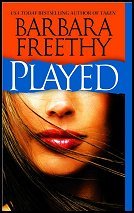
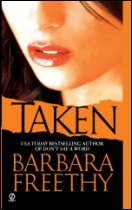
After many years of writing stand alone books, I decided to write two linked contemporary romantic suspense books. TAKEN is out this week. PLAYED hits the shelves October 2006. Both books are stand alone but there is an intriguing link between them.

I don't know why I resisted the urge to write linked books. A long time ago I had an editor who said she thought it was risky to write stories about three siblings or three friends, because if the reader didn't like the first book, she might not read the rest. Well, I think judging by the extreme popularity of linked books in the past few years that this editor was well ... wrong. But even a few years ago another editor told me she thought the trend of linked books was fading. I, however, have seen no evidence of this. I think readers enjoy getting to know a group of characters or reading about characters who are friends, family, enemies, or related in some interesting way. On the other hand, I'm sure some of us have run into series that just don't hold our interest. And occasionally we might wish there weren't two more books to get through before our favorite writer created a new series.

Certainly one of the challenges in the writing of linked books is to make sure each story is really complete. I dislike it when individual books of a trilogy feel too "thin" as if this were really one story divided into three. I personally love to make my books as complicated as possible, probably one of the reasons I resisted linked books until now. I usually throw everything into one story. But this time around I had so much material and a really interesting villain that it made sense to write two books. Hopefully the readers will agree! Another challenge in writing linked books is to make sure that the front running romantic couple is more interesting than a secondary character waiting to get their book.

So what do you think? Do you loved linked stories? Are you tired of reading trilogies? Are you more likely to buy a book because it's part of a series? Or does it matter?

Wednesday, June 07, 2006

"That's what sells": From an author's point of view


I recently read a letter to a book review editor lamenting the fact that the reader’s favorite authors so often change the kind of book they write because “that’s what sells”. The reader said that she would just get to know and like an author who was writing, say, historicals, and then the author would switch to chick lit. I read the letter with a certain amount of sympathy because I’m an avid reader myself and I have had the same frustrating experience.

However, I want to say a few words in defense of those genre-switching authors. When they say they have switched genres because that’s what sells, the authors are referring to selling their work to a publisher. It doesn’t mean they’re being soulless money-grubbers who just want to shove more copies on the reading public; it means that they want to continue to see the books they write being published. Having one or two or even ten books published is no guarantee that the writer’s work will continue be bought by a publisher. If you don’t write the kind of book editors want to buy, you can’t get your work into print or e-format for readers to enjoy.

Of course, by extension, these are also the kinds of books the editors believe they can sell to the reading public. Publishing houses want to maximize profits, just as any other business does. They buy books which they believe will appeal to readers’ tastes somewhere between six months and two years in the future, a tricky prediction. They study market research and try to forecast trends. It’s a tough job.

It’s tough on the writer too. However, sometimes being forced to write “to the market” is a useful challenge. I recently completed my first romantic suspense novel. It took three tries to get it right but I am incredibly proud of the finished product. I learned a lot about myself as a writer and I discovered the joys of creating a really nasty villain. Although I had to push myself to plan the plot far beyond anything I’d ever done in previous books, there were times my fingers just flew over the keyboard because I was so caught up in the story. That’s when you know the challenge was good for you.

There are some authors who change what they write because they themselves decide they are stale and need to try something new. However, many writers reinvent themselves because they have to if they want to continue to see their books on the shelves of their local bookstore and in their fans’ hands. So, gentle readers, I hope I have tempered some of your exasperation with your favorite authors who seem to randomly wander into new fields. Keep in mind that they may be as frustrated as you are!

Monday, June 05, 2006

Chasing Dreams

"What would you attempt to do if you knew you could not fail?" - Dr. Robert Schuller

I can't count how many people who've never tried to do it before have said to me, "I've always wanted to write a book." I'm a huge believer in following your dreams. Heck, not just following them, chasing after them, grabbing them by the throat and wrestling them to the ground. :-) So when I hear this comment, my answer is always, "Then you should sit down and do it." What follows next is generally a litany of excuses that can be summed up in four words: "I don't have time."

This is where I'll nod and tell them that maybe someday they'll do it, but if they haven't found time yet, I doubt they will later. There's never going to be time to write. There's always something more pressing that needs to be done, something that will sap time and energy. And as long as writing is at the bottom of the list, no, they won't have time for it. IMO, though, there's a big difference between wanting to write "someday" and being a writer. A writer has to write. It drives them. The stories in their head won't allow them to push them off with "someday."

But there are also Stupid Writer Tricks (with apologies to David Letterman). I think I know every stupid writer trick there is because I pulled them on myself for years. They're such beautiful lies and so easy to believe.

Let me add a caveat here: Different writers work in different ways. What's a stupid writer trick for me, might be someone else's successful writing method. In your heart, you know which it is for you.
  • I'll write as soon as inspiration/the muse strikes me
Oh, yeah, I waited for inspiration for quite a long time. It's amazing how seldom it turned up and how little writing I actually had to do. What's funny, though, is once I committed myself to pursuing my dream how often the muse showed up after I was working for a while.

If I was having a bad day at the keyboard, instead of playing Minesweeper, I would tell myself, "You have to write for ten minutes. It doesn't have to be good and you can cut it all later, but you can't do anything but write. Besides, anyone can write for ten minutes." And so I'd write and maybe it was horrible stuff, but it was incredible how often that inspiration was there before those ten minutes were up. So I'd cut the junk and keep writing.

There were days, though, that the muse didn't arrive in those ten minutes. I'd allow myself five minutes to play Minesweeper and then I'd make myself write for another ten minutes. I can only remember one time that it took more than a couple of instances before I was off and running on my story.

So if you're one of the writers telling yourself you'll write when the muse arrives, I say chase after her and drag her to the keyboard yourself!
  • I'm writing, I just want to make my first chapter perfect before I move forward.
I'm a total perfectionist and this was such a fabulous way for me to never finish a book. I'd write and rewrite the first chapter until the life was sucked right out of it. Until I was so bored with it that the last thing I wanted to do was write more of this story. So then I'd start a new story and there'd be a new chapter one to fiddle with. I could tell myself I was writing, but I was accomplishing nothing.

How'd I overcome this stupid writer trick? I realized that as long as I pursued perfection--an unobtainable goal--I was never going to finish a book. I had to give myself permission to write sentences/paragraphs that were less than perfect and promise myself that everything could be fixed after the first draft was down. In the beginning, I regularly chanted: It can all be fixed on revision. And it can.
  • I have to research (Fill in the blank) before I can write the story.
There's a difference between having the base knowledge you need to start a book and researching so much, that you could give the experts in the field a run for their money. Yes, I've done this too. I went on backstage tour of Sea World and I was answering questions about sharks for our guide. I'm not lying.

Did I ever write the book that I was researching sharks for? Nope, but I do have an over-edited and lifeless first chapter.

My advice here is get the strong base knowledge you need to set up the story, then start writing. Honestly, you won't know which small details you'll need until they crop up in the book. When the first draft is done, or when you're done writing for the day, then you can research those smaller details.

Dreams are scary things. It's so much easier to fantasize about achieving them than it is to put in the work it takes to reach the goal. Fantasy allows us to believe that if we just had the time, we'd have what we always wanted, but actually pursuing the dream brings anxiety. What if I fail? What if I'm not good enough? What if....? This doesn't only apply to writing, but to anything we dream of doing.

This is where the quote at the top of this post comes in. My viewpoint on life is that when we're on our deathbeds, we won't regret the things we tried and failed at, we'll regret the things we wanted to try and never pursued for whatever reason. No, it's not easy, but how many worthwhile things are?

One more inspirational quote:
Fall down seven times, get up eight. - Japanese proverb

What stupid writer tricks have you pulled on yourself and how did you overcome them? Or maybe I should say, what stupid human tricks have you pulled and overcome? I think we all have them, the hard part is working around them.

Friday, June 02, 2006

Going With the Flow

The past couple of weeks have been an exercise in "going with the flow." For instance, I had planned to work in my flower beds this a.m., planting the lily bulbs and daylilies and things that came in. (I ordered a bunch last year, and none of them came up because they'd arrived all moldy and nasty, so I sent back the label I'd very carefully saved, and just got replacements.) I had it all timed out. I'd work about an hour and a half and have time to come in and shower before meeting with the young man I'm talking to about working on my website. (Oh, and I'd squeeze this blog in there somewhere too.)

Well, I got about a half hour in to the work, and my hand really got to hurting. When I looked at it, I had rubbed a blister on my palm and then broken it, digging holes to put those lilies in. Even going back to put my gloves on (yes, I have some, but silly me didn't think I'd need them) wouldn't feel good, so I stopped.

Then last week, I had planned to spend the week finishing up a proposal on the demon virgin story when my glasses fell right in half on my way out the door to walk to the post office on Monday. In Half.

I have a separate pair of prescription sunglasses, and I have special glasses to wear only at the computer (I refuse to get trifocals--bifocals are bad enough), but I wasn't sure I had any "regular" glasses I could wear in the meantime. My prescription is the type that when I go into the one-hour places and ask about their one-hour service, they say things like "Oh yes, we can do that with most prescriptions...except for yours. A week to ten days." This meant a hurried trip to the optometrist in the big city 60 miles from my little town which takes, at minimum, half a day--more, if you've saved up errands and such for the trip, which I always do. Anyway, between that, and the already planned trip to the nephew's high school graduation, last week was pretty much shot.

By now, if you're a regular reader of the 2 B Read blog, you know that I am a procrastinator, and that I am "chaos-organized." That's actually a technical term used by psychologists in a study I read once upon a time that spoke to the differences between Helicopters and Trains. Apparently the world is divided into helicopters and trains--IOW, those whose brains are chaos-organized--who not only thrive in chaos, but if there isn't enough of it, they create some-- and those who are linearly-organized, who think in an orderly, progressive, one-building-block-on-the-next manner. Most of us know instantly which we are.

Even though, according to those psychologists in the study, the chaos-organized person deals better with interruptions, because they prefer having more than one thing going on at a time, I still tend to have trouble when my plans go awry. It's taken so much effort to learn how to focus and get the writing done (or make myself go outside and do actual work), that when other things get in the way, it frustrates me no end. (Well, not the gardening work stuff--I was kinda grateful I had an excuse to quit. Maybe I can con the large son or the spouse into digging the holes for me...)

But what else can you do? Life gets in the way sometimes. Glasses fall apart. Grandsons come to visit. You have to just go with the flow, and keep making those lists. I figure eventually, I'll get to everything on it, and if I don't--well, it probably wasn't that important anyway...

Oh, and I did get the proposal finished, even with my minimal writing time last week. I had maybe ten lines to add on Monday, and I mailed that puppy off to the agent yesterday. I think I'd better give her a bit of a rest now...

So which are you? Helicopter or train? How do you cope with life's disruptions?

Thursday, June 01, 2006

And the winner is...

Apologies for being late! I planned to blog yesterday. But I spent most of the day in an intense (and fun) session with critique partners, and the evening in a judges' wrap up meeting for my local RWA chapter's contest. Critiquing was great--my revised first chapter was well received. Ah, if only it came out right the first time... Now I only have twenty more chapters to tune up.

Judging my local contest was challenging and interesting. It was a great opportunity to work with two other experienced authors, and to read the work of up-and-coming authors--some just starting out and some who have been writing a while, who've taken workshops, and who have been working hard at the craft. I feel its a big responsibility--as a judge, I hope to encourage, to help, and to be tactful and honest. And for a while, I felt as though I was in an editor's shoes--very enlightening.

When I first entered contests I received some brutal truths, but those truths helped me grow. It was tough to discover I wasn't a 'winner' the first time around. But I often think that had I sold that first book, I wouldn't have been ready to deal with life as a published author. Would I have had the confidence to deal with changes in the market? Would I have had the skills to create a second book? Would I have been prepared to deal with set back?

I learned so much from taking that first step--putting my work out there for others to read and to comment on. For those of you entering contests, I wish you the best of luck. And congratulations!

Monday, May 29, 2006

Memorial Day


My adopted hometown in New Jersey is pretty small at just over 7,000 folks. Despite the fact that it’s located a mere fifteen miles west of sophisticated, urbane New York City and many residents commute there, we celebrate Memorial Day in a wonderfully small town way.

First, we have a parade down our main street past the Victorian houses decorated with flags and red, white and blue bunting. The “floats” consist of emergency vehicles and antique cars. The marchers are the town council, the Rotary and Kiwanis Clubs, the local police force, Scouts of all ages, and scads and scads of children from various town organizations. The only professionals are the high school marching band of which my trumpet-playing daughter is a member.

We cheer all the marchers as they pass by and then follow the end of the parade down to the war memorials set between the school and the library. Our little town has sent many of its sons and daughters to war and the memorials pay respect to those who died in World War I and II, Korea and Vietnam. Sadly, we also have a memorial to our civilians who died in the World Trade Center attack.

The mayor makes a solemn speech. The Scouts place wreaths of remembrance on the memorials. Each fallen soldier’s name is read into the stark silence. Then the most moving part of the ceremony takes place. A single trumpet plays taps from the hill in front of the school. Another trumpet answers from the hill in front of the library. By the last note, I have tears streaming down my cheeks.

This year will be especially emotional for me because my daughter has the honor of playing the echoing trumpet. I’ll be taking lots of tissues.

After we honor those who sacrificed their lives in the service of their country, we adjourn to the recreation field for a townwide picnic. My husband cooks hot dogs, my daughter hands me her trumpet and the wool jacket of her band uniform, my son takes his soccer ball, and I revel in the sense of community that brings us all together for both tears and laughter.

How do you spend your Memorial Day?

Thursday, May 25, 2006

Summer's Here!


Today is the last day of school. Besides writing, I also teach 11th grade English. Today I have to give two finals, and then it's on to Memorial Day weekend. My children and I bought Six Flags season passes and we're going to start tonight.

As the year winds down, one of the treadmills that I run on will be turned off for a few weeks. I'll focus primarily on finishing the book due July 15 and also on writing something my agent has been wanting for a while.

I'm discovering that life is a balance. My family and I also plan to travel--July right now is wide open. Instead of doing RWA, I'm going to simply take off. We're also going to be tourists in our own town as well--doing things like attending a NASCAR Busch series race and going to the top of the Arch.

I dropped my August cover in because my Capturing the Cop cover is over in the bar to the right. Its run is finished this weekend, and it moves to a place in my backlist. The Marriage Campaign replaces it. By August, I'll be back in school (August 1 to be exact), once again turning on the treadmill and starting to run for the next 10 months. But I wouldn't have it any other way.

So, nothing really profound today. Just a wish for everyone to have a wonderful summer and may you find joy each day.

Michele Dunaway

Wednesday, May 24, 2006

Adventures at My First BEA

For years, I've been hearing authors talk about the BEA. What is it, you ask?--the same way I did the first time I heard those letters. BEA stands for Book Expo America, but what it means is that every publisher in America, and many from around the world, get together in a huge warehouse like convention center, set up booths and give away (free) lots of copies of their soon-to-be-published books to booksellers and librarians from every city and hamlet in the country.
Originally, I thought I would get to sign my new book. But about a month before, my publisher (Running Press) said they weren't going to get them in time so that was out. But I went anyway and I'm so glad I did. Talk about feeling like a kid with free rein in a candy store!
We (Kathy Carmichael met me there) arrived on Thursday afternoon and ran down (Washington DC Convention Center) to check things out. Everyone (publishers, distributers, writers organizations, people selling ad space and book related promotional items) was putting together their booths and big fork lifts were driving around, delivering pallets of books and tables and who knows what else to everyones' booths. It looked like a huge construction zone. And it looked like a challenge, just getting everything to the appropriate people and places. (At the RWA booth, Allison and Nicole were tracking down their boxes and hoping the people in the know would find and deliver them in time for them to get things put together.) We wandered for a little while, kind of getting our bearings, but didn't stay long since it looked like a dangerous place to just hang out.
We took the Metro back to our hotel and got ready for dinner with a fun group of RWA board members Kathy served with while she was on the board, and Robin, daughter of a friend and a buyer for Ingrams and Beau, her cutie husband. Besides a lot of talk about our various pets, we compared notes on who and what we were going to see and which books we were on the hunt for. As a buyer for Ingrams, Robin was invited to a special showing/movie preview of "The Da Vinci Code." (I think that was sponsored by Warner Books.) I swear, it was the last time we got to sit down for the next two days.
Bright and early the next morning, we headed back to the convention center. (You can't imagine how big this thing is until you try to picture this: both the C-Span and Ellora's Cave had huge buses as their booths and they didn't stand out more than anyone else's booths.) Everything was lined up like a little city with the rows numbered like addresses. (There were huge banners with the 'row' numbers--and advertisements from some of the bigger publisher beneath them--hanging high from the ceiling so that if you knew what you were looking for, you could actually find things. I'd found the Perseus/Running Press address the night before so I was off to the 4300 block. (We'd decided the day before that if we needed a place to meet up during our time there, we'd meet at the corner of Ingrams and RWA, or beneath the 800 row banner.) I found the 4300 block (started seeing the big Perseus sign long before I got there) and expected to have to hang around, reading names tags to find my editor and publicist since I hadn't met either of them before. The first name tag I read was Seta, my publicist. And she must have read my name tag about the time I read hers because she greeted me with a big, "Alfie" and then grabbed a book and handed it to me. "Guess what I have!" It was my book and I will never get over that thrill of holding one of my books in my hot little hands. (No, I didn't feel *like a virgin*, JoAnn. It always feels like a miracle to me and I want to sing the Hallelujah Chorus--and I'd much rather have that running through my head.)
It was a 'bindery run' copy, she said--whatever that is. I assume that's the same thing as an arc, but having never gotten an ARC before (Advanced Reading Copy), I don't know.
Seta seemed surprised that I was so excited. I told her that I was always that excited and the only thing different this time was that I wasn't going to have a chance to sit down and read it immediately, the way I usually do. (Usually, everything stops while I do that but in this case...)
She had to go back to work at that point; they were doing a signing with one of their authors and returned her attention to helping him. *He* was Joseph C. Phillips, the super-hunky actor who was Lisa Bonet's husband on The Cosby Show, among other things. His book is *he talk like a white boy, Reflections on Faith, Family, Politics and Authenticity* and I immediately got in line and got my own signed copy. (Yay! My very first book from the candy store. Can't wait to read it.) When Seta had another chance, I found that my editor, Lisa Clancy wasn't around yet so I said I would check back until I caught her and went my merry way.
Kathy and I met up again and when we turned our first corner, ran smack into a couple of sweet young things, handing out copies of Debbie Macomber and Emilie Richards' new books. They invited us into the Harlequin booth to have them autographed. So we met and greeted several authors, booksellers and editors we knew, caught up with bits of news while we waited in line. (Harlequin had a terrific bookbag they were giving out, thank goodness. I hadn't brought one and it looked like I was going to need one badly!)
After some more wandering, taking books people were handing us, seeing the sights, we met up with Diana Peterfreund for lunch. Diana got a lot of publicity when her first book was bought and it, *Secret Society Girl* will coming out in June. Besides having a wonderful lunch and interesting conversation, I got the feeling that Diana was a great example of an author publisher's expect to be BIG. She was scheduled to sign ARCs on Sunday so unfortunately, Kathy and I missed that since we left on Saturday evening. (See pictures of her signing at her blog. The pictures also give you a feel for what/how the various booths looked.)
That was an interesting aspect of BEA. Big name authors (and celebrities) were there signing, but there were lots of other authors, too. Some--like Diana--you got the feeling the publishers were putting the 'push' behind and expecting them to be big someday. Others, you got the feeling that their publishers wanted to use to draw people into their booths to promote their wide range of books, in general. (I'm not sure if that distinction makes sense, but there was a difference.)
After lunch, I went back to Running Press and--yippee--finally got to meet my editor. She was as wonderful and smart in person as she's been not in person. As usual, she wasn't at all the person I'd pictured in my mind. (She was younger, as usual. For someone who's worked in publishing for as long as she has, she was much younger.)
I met Kathy and Diana back at the hotel later. And then, after we'd hung out in the concierge lounge for awhile, I went to bed, exhausted. (My feet were killing me, my knees were killing me, my ankles were killing me--anywhere I had a joint was killing me; I actually had the beginnings of a blister on my *shoulder* from carrying that ever growing lug of books around all day. Did I mention that there seemed to be nowhere just to sit for a second, anywhere?)
The second day--we had until 3 in the afternoon until we had to head to the airport--was the day the first should have been. We got there early enough to figure out where the "traditional autographings" were. They had thirty long tables set up in a row upstairs--think RWA literacy signing--where every thirty minutes for some, an hour for others, the authors changed. I don't know but think publishers probably had to pay for those spots at the tables. They had arranged long aisles to each of the tables, leading both to and away from the authors. The Celebrity and BIGNAME authors had huge long lines. For some authors, Joyce Carol Oates, James Patterson, Debbie Macomber, etc., you had to arrive at 7:30 in the morning to get *tickets* for their lines. I didn't stand in any long lines. There were too many books to choose from to waste time that way. (Not that I would consider any of you *famous* folks a waste of time, mind you...I'll just catch you another time.) The other thing Kathy and I discovered was a shipping area where you just went in, got a box and put your name and badge number on it, and dumped your books into it. When it was time to leave, you just went in, filled out a form and they closed it up for you and shipped it home to you. (We need that at RWA, btw.)
While we were hanging out the evening before, I went through the whole BEA schedule and highlighted the books/authors/booths I really wanted to see. Then I made a long list, in "address" order and by time so that when we got there that morning, we started at the low numbers and worked our way steadily to/through the places we wanted to be. (I only got through half my list, boohoo.)
I didn't manage to find where they were doing the workshop-like "sessions" they called Special Events. (I suspect they were down the hall from the place where they were doing the traditional autographings.) When I first looked at the schedule, I pictured myself going to at least a few of those. (Come to think of it, it would have been a chance to sit down.) There were things like Beyond the Code: Building the new Fact-filled Genre; Editor and Bookseller Buzz Forum Celebrating Five Years Featuring the Impassioned Voices of Editors; and Book Industry Trends 2006.
Outside the two block square convention center, several small cars--I saw three at once but don't know exactly how many there were--painted and decorated with Google stuff, continually circled the block with signs that said "free transportation for BEA attendees." They were never around when I was actually going somewhere. At the front of the building, six buses ran shuttles every fifteen minutes between area hotels.
Every time I slowed down for more than 60 seconds to catch my breath, I met someone interesting and (possibly) advantageous to my career. (Librarians, booksellers, book buyers for a couple of large chains, etc. One of the librarians asked if I'd come to an upcoming book fair in her city. We exchanged email addresses. We'll see what happens with that.)
All in all, I'd go again in a heartbeat. Only this time I would be wiser and have my plans set and mapped out before I ever left home. Going as a big name author might be a bit of a strain, simply because I suspect your publisher would have your dance card filled with places you had to be and things you had to do. And you'd probably have to fight off fans--these are mostly booksellers remember--recognizing you. Wouldn't likely be conducive to relaxing and enjoying. But going as one of the crowd? Priceless! Sign me up for next year.

P.S. Got my box of books this afternoon. Yay!

Tuesday, May 23, 2006

Like a Virgin


It’s been one of those weeks. One of those two weeks, actually, when the business of writing kept interfering with the actual writing. E-mails back and forth, to and from agents (and yes, that’s plural; I have two, which can be interesting at times). E-mails to editors and publishers. Letters from publishers to agents. Conference calls with agents, then more e-mails to agents, publishers, editorial directors, and editor. Plans to be made, roads to be chosen. In the midst of this flurry of activity, there were website decisions to make, all which seem vastly important, but in the great scheme of world events (can we say war, continued Gulf Coast suffering, drought and babies dying in Africa?) they aren’t worth nearly the amount of time I’ve spent fussing over them.

Then three days ago memo-to-me began sending reminders that I was scheduled to blog today. The reason, when I signed up for this date three months ago, was to announce that today’s the day IMPULSE is officially published. I say officially because according to reports from readers and my own sweetie, it started being scattered across the country last week. But all this business stuff had me drained. Forget about writing on my upcoming book. I had no idea what to blog. It seemed a little tacky just to tell people to BUY MY BOOK! NOW!

As of late yesterday afternoon I still had no idea what I was going to do. About anything, but I’m big on prioritizing and obviously 2 Be Read had just shot to the top of my to-do list. Then the UPS truck pulled up in my driveway. I order a lot of stuff on line – books, scrapbook paper, gifts for grandbabies and friends, etc. – so I waited for the driver to come to the front door. But instead he took the package to the garage, which – sigh – meant it must be for my sweetie, who, since he took way early retirement, has been hand-building wooden boats in two of the three stalls of our garage. Not model boats, either. But real ones. This is actually my fault for having sent him – just as a joke! – the plans for a pirogue I found while researching BLUE BAYOU. Well, he took it seriously. Which is okay because the grandbabies love riding in it whenever they come to visit. Next was a cedar strip canoe he auctioned off to raise money for the Tennessee School for the Deaf. Last year’s boat was a kayak. And this year he’s working on a yawl. Y’all. :)

But I digress. . .

Anyway, needless to say, wood and Fiberglas and all sorts of special boat building material and tools are all the time arriving at our house. So, deciding that I wouldn’t get anything fun to open, I tried to go back to work. Actually I went back to web stuff to announce the contest winners for the IMPULSE publication countdown. (And what made me decide to do that anyway? Doesn’t it now mean I’ll have to stop writing to send out seven books with nice little friendly hand-written notes?)

Then my boatbuilder came upstairs with the cartons of books that had just been delivered from Simon and Schuster. And my day/week/world changed. It was suddenly Christmas in May. With me warning him not to cut the dog’s nose, he carefully opened one of the cartons with his Swiss Army knife. There the books lay, in all their shiny blue splendor. I took one out. Admired it. Checked to make sure they had, indeed, changed the spine labeling from romance to romantic suspense, as I’d requested when I’d gotten the first run of covers. I gingerly opened it to check the dedication, which was really important to me and I’ve been worried for months that it might get left out. But no. . . It was there.

Then I sat down at my desk and ignoring the dinging of my e-mail alert signaling yet more obnoxious business stuff, I began reading. And yes, I am one of those who enjoys reading my books. By the time they arrive, I can read more like a reader. Or at least as a writer who’s forgotten so much of the book I can be surprised. And occasionally, I’ll stop and go, “Wow. Did I write that? Not too shabby, girl.”

I’ve written 96 books. Named 192 heroes and heroines. (I ran out of original names a long time ago, but I figure if George Foreman can name all five of his sons George, I can have two Jacks. Or a couple Kates.) Twenty-three years ago, when the first box of books arrived, it seemed like a miracle. That I could actually be holding, in my very two hands, a story that had first been born in the swirling mists of my mind. A story that I could now share with the world. (Or at least the romance readers of the world.) Fortunately, enough people liked that story, and the ones that followed, that I’ve been able to build a very nice career on my Jacks and Kates and Nicks and Erins.

But every time that box shows up at my door, and my sweetie folds back the brown flaps, that old Madonna song starts singing in my head, because as I reach down and take out a copy, and run my fingertips over the foil, smell the aroma of freshly printed paper, I’m swept right back to 1983, and feel just like a publishing virgin. Touched for the very first time.

Monday, May 22, 2006

A Rant in Praise of Happy Endings

Two days ago, I rented a movie and, tired after a long day writing, settled back to watch it. As the friend who recommended it had promised, this flick had great acting and wonderful characterization. The trouble was, all that characterization was used to depict fictional human beings who continually screwed up, learning nothing from their errors, until each member of the family was left dysfunctional, isolated, and in need of long-term therapy. It had one of those subtle endings, too, where you’re so taken by surprise when the credits roll, you start tearing at your hair and shrieking, “I spent two hours of my life on this?”

When critics, pseudo-intellectuals, and people who never read the genre play the “more erudite than thou” game, one of their favorite slams against romance is the guarantee of a happy ending. As if happy endings where two people get together in a committed relationship are somehow less than, say, happy endings where the murderer is caught, the protagonist survives grave danger, a battle is won, or human colonists on some distant moon escape extinction.


Oh, wait. Those kinds of endings often happen in romance novels, too, as elements in the books’ external plots. Just as when I read novels shelved outside the romance aisle, I usually recognize romantic elements in them, too. And a lot of them have – oh, the horror – happy endings.


Well, here’s a news flash. People love them. If they want to be depressed, they can turn on the evening news. If they want insoluble problems, they can read the paper. If they want to see unhealthy relationships that go nowhere or come to bad ends, they surely don’t have to look far, either. People pick up popular fiction after a tough day working, wrangling kids, or caring for sick parents so they can get a break from stress and worry. They trust their favorite authors to take them to a world where the bad guys always get theirs, kittens don’t have to worry about getting drop-kicked, and people who struggle hard and try to be decent human beings are pretty well assured of having someone nice to cuddle at the day’s end.


As a writer, I love taking readers to places they’ve never been, allowing them to meet fascinating new people they might never encounter, and enticing them to sweat out my characters’ harrowing journeys in the comfort and safety of their (that’s the readers’, not the characters’) favorite lounge chairs. If I introduce my readers to new ideas or make them consider other points of view along the way, that’s nice, but primarily, I see my job as allowing the reader to slip into the skins of my books’ heroes and heroines and hang on for a wild ride – knowing that though there might by some surprises, some skinned knees, and bruised hearts along the way, there will be a moment of truth. And better yet, I’m going to darned well tell them how it all comes out.


The way I see it, an author gets paid to tell a story – a story with a beginning, a middle, and an end. And a commercial author in particular works hard to build larger-than-life characters with whom the reader will identify. These characters go on to represent the reader, much in the same way a school’s or city’s sports team represents the fan base.


Who wants to see his/her team lose? Sure, the best games are those where the outcome is in doubt and the opponents worthy, but in the end, I know I want my guys to overcome the odds. A home team’s sports victory relieves stress and releases endorphins, just as a happy ending in a book or movie leaves the reader with a sigh of satisfaction and the strong desire to repeat the experience again soon.


An unhappy ending or – worse yet- no real ending at all leaves most audience members depressed and anxious.


Is it any wonder that popular fiction – especially romance – is so, well, popular? Crowds cheer when the Death Star is blown to pieces, the Lost Ark is swiped from under the noses of the Nazis, and Sally finally realizes Harry has been the right one all along. And I cheer right along with them.


If that makes me a philistine, sue me. I plan to go on writing happy endings as long as there are readers who prefer a hopeful brand of fiction to a prescription for Prozac.

Sunday, May 21, 2006

The Company of Women

Every year since 2003, one of my cousins has organized a DivaFest -- a week of vacation with just girlfriends, lying on the beach and enjoying the company, along with good food, good wine, creative cocktails, and wonderful conversation.

This year was the first time I had an invitation to join them, and I did feel some trepidation around going. I'm a writer, after all, and spend most of my days alone with a story. What would happen when I showed up at a DivaFest of 11 women where the only 2 women I knew were cousins I hadn't seen in years?

The answer: I'd have the time of my life!

There are a couple of reasons for this, I think.

The first, and most important, is that I had no expectations about any part of it -- how I thought things would go, who I would meet, whether I'd like them or not, or whether they'd like me or not. Better yet, they seemed to have no expectations of me, either. I just had to show up, and the energy surrounding these lovely, creative, funny, engaging women was enough to float us all on a tide of goodwill and enjoyment.

The second thing is that women in largish groups have a different energy from mixed sex company, especially when there’s a decent supply of rum involved. We did the whole "girl-dancing" thing at a neat dive bar, which was very liberating for little ole reserved me, and it was all about having fun. None of us were trolling for men, so "performance" wasn't an issue or a worry. (Though we did inadvertently catch two or three!)

I feel very blessed to have been a part of such a fun crowd for the four days I could get away to attend DivaFest. I came away feeling energized and motivated and empowered. Now, if we could only bottle this power and take a sip every now and then on the tough days!

Or maybe we should arrange more day-to-day Diva events -- a DivaConferenceCall or a DivaDinner or a DivaNight -- to keep that unique female energy flowing.

What do you do to connect and reconnect with the women in your life?

Thursday, May 18, 2006

Procrastination

Hello, my name is Gail, and I'm a Procrastinator.

Don't you think there ought to be a twelve-step program for us? Procrastination certainly gets in the way of accomplishing what we want to do. The last time it was my turn to blog, I wrote about fear, which is one reason we procrastinate. But today, when it's my turn to blog again, it's mid-afternoon and I am finally getting around to it. It has taken me this long to get here is due to my methods of coping with my procrastination. (Or maybe it's not procrastination--maybe it's my disorganized approach to organization...)

Like many people, I have more stuff I want to do than I have time to do it in. Which means prioritizing. And for me, it means writing my priorities down in lists because if I don't, I'll forget something--and I might forget it anyway. I can't keep up with anything technological or even one of those dayplanner things. I use a little spiral notebook. Right now, I have a calendar my best friend gave me that is just like a little spiral notebook, only with dates included. And on the top of every page is WRITE.

I print it in all caps and add the abbreviation for whatever manuscript I'm working on. Then lower on the page, I add all the other stuff I want to do that day. Dust the new bookshelves and move books. Revise my workshop for RWA National. Laundry. Call for a haircut. But the writing always goes at the top. Because I have found that if I don't do the writing first, I often don't get to it at all.

I put everything else aside and devote my mornings to the writing. Even though that's when it's cool enough to stand to get outside and dig that stupid Bermuda grass out of my flower beds, and cool enough to walk to the post office for the mail. Even though I was signed up to blog here at the 2BRead side today. I wrote. Got 5-1/2 pages squeezed out. (The insurance adjuster came to look at my poor hailed-on vehicle about half an hour before I normally quit.) (I know, excuses, excuses.) I didn't even remember I was supposed to blog today (even though I sent myself a reminder yesterday) until I got online after lunch and the post office to check e-mail. I forgot to put it in my to-do list.

My list really helps with the procrastination. After I move something from one page to the next four or five times, I get sick of looking at it and actually DO it. Most of the time. (The haircut thing tends to take a couple of weeks before I there.) It helps me get the books written, because with WRITE at the top of every page, I'm reminded that I need to do it first.

But sometimes, my methods of dealing with my natural procrastination mean that other stuff gets forgotten, or done just a teensy bit late. Am I the only one this disorganized?

Wednesday, May 17, 2006

More of the next big thing

Lori wrote: Maybe a new mix--Space bound Cowboys (along the lines of the Firefly series). Or Gothic Chick Lit. (someone please write one of those--I've got to read it.) Or maybe Kick Ass Heroine Regencies. (Serve your own d@mn tea.)Whatcha think? You can tell me...

Lori, I love these ideas. While I read and write the subgenre you don't enjoy, romantic suspense, your ideas for the next big thing grab me. I'd love to read a Gothic chick Lit. I can picture the heroine now, in Elvira garb and living in the hero's dark mansion. And KickAss Heroine Regencies? Those would be a hoot. They'd have to be tongue in cheek.
Not something I want to tackle on my computer, but if they're published, I want to read them!