Thursday, May 04, 2006

IT AIN’T JUST A RIVER IN EGYPT

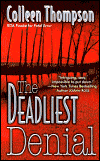
With the release of my latest romantic thriller, The Deadliest Denial, I’ve been giving a lot of thought to the various types of denial in human life. While I was writing the book, I was thinking of denial as the psychological equivalent of a life ring thrown to a drowning person in the face of unendurable pain: the betrayal of a spouse, the death of a loved one, the failure of a beloved child to live up to a parent’s expectations. Sometimes this denial turns into a desperate, self-imposed blindness, occasionally with fatal results.

But fortunately, most denial is more innocuous. Here are some of my personal favorites:

· I am going to clean out my perpetually-cluttered office once this book is turned in. (Bwahahaha! What a riot! Once the book is turned in, I will realize I am unemployed and frantically start work on a new proposal. Or two. Then I’ll do those pesky tasks, like paying bills, restocking the kitchen, and cleaning the bathroom before the health authorities show up. Any time I look at the overwhelming stacks of unfiled papers, I will immediately come up with some pressing self-promotional chore – or check my e-mail for the thousandth time.)

· I am going to walk more as soon as the pollen dies down (or the humidity decreases or the heat tapers off or – rarely – the cold snap ends). I live in the Houston area. Allergens, heat, humidity, mosquitoes, and rare cold snaps come with the territory. If I really want to walk, I’ll deal with it and do it. Daily, just like writing.

· One day, my house will all be clean at the same moment. (This is only happening if a. my mother-in-law, a famous white-glove tester type, is swooping in for a visit or some financial miracle allows me to hire a maid. I’d rather spend my days writing than cleaning something my family won’t allow to stay clean for more than ten minutes. After all, the books, once written, stay written.

· My book’s success is directly correlated to the amount of money and effort I pour into self-promotion. (I’ve mostly decided it has much more to do with the quality of the writing and universal appeal of the story, but I still catch myself panicking over not doing enough on my own. Whatever “enough” is.)

I frequently meet people who struggle with their own brand of denial in the writing department. They tell me:

· I’ll start that book tomorrow.

· I’m going to write as soon as I retire.

· You’re so lucky to have time to write (said resentfully). I have to a. work to support my family, b. raise children, c. tend to my ailing parents (as if those of us who write live in ivory towers with elves who come out at night to handle all the dirty work of life!)

· I’d be published by now, but I haven’t had the same breaks that you have. (This is always uttered by people who fail to complete manuscripts, send out queries, keep up with the marketplace, or do any of those out pesky chores associated with actual selling.)

· The only people who sell are mindless hacks like (insert name of famous, successful author). New York is too afraid to take chances on truly original work like mine. (Usually uttered by someone who’s written a 1,000-page tome on hairy, bisexual Neanderthals teleported to some technologically advanced-planet populated by goop-creatures – or something equally marketable.)

So what’s your favorite denial? And which ones are you most sick of hearing from others? Inquiring minds what to know…

Wednesday, May 03, 2006

Did you really mean that?


When I was invited to contribute an essay on the television show Desperate Housewives to the anthology Welcome to Wisteria Lane, I was sure I would write about story arc or dialogue or social satire vs. soap opera. However, as I watched Season One from start to finish on DVD in one week, something else caught my eye, literally. The sets. Television is, of course, a visual medium, and I was blown away by the skill of the production designer in using this strength to the utmost.

My essay concentrates on how the houses both reflect and give depth to the characters of the Housewives. I found all kinds of symbolism in the lack of basements (until the second season), the choice of artwork and each abode’s window treatments. I even discuss the differences in their front doors and what it says about the characters’ balance between public and private life.

That got me to thinking about literary criticism. As an English major, I used to have a grand time finding Christ and other kinds of symbolism in works of literature, and occasionally I wondered if the author really meant it to be there, or if I was just making this stuff up. Since college I have talked with many people who have the same question.

One way to answer that was to analyze my own work. How much symbolism did it really include? I discovered that my symbolism works on two levels: the conscious and the unconscious. I often deliberately include small details, such as the kind of flower a character has on the hall table or the color blouse she chooses to wear on a given day. If a reader notices these things, it will add depth to the reading experience. If the reader doesn’t catch them, it won’t detract from the book.

However, my symbolism also functions at an unconscious level. My first book A Bridge to Love is all about bridges, real and metaphorical. I consciously made building those bridges the theme of the book. Oddly enough, I have a phobia about driving my car over high bridges; if I try, I find myself in the throes of a full-blown panic attack. One evening I was at a party chatting with a fellow soccer mom who’s also a psychiatrist. She had just read the book and was complimenting me on it. Then she said, “I see you’re working out your phobia in your writing.” My mouth fell open because I had never connected the theme of the book with my fear of bridges. I felt as though I’d been smacked up aside of the head. I also felt like an idiot: there was a heck of a lot more symbolism going on than I, the writer, had been aware of.

So what do you think about symbolism in writing? Is it really there or do the literary critics and English majors make it up to give themselves something to talk about?

Tuesday, May 02, 2006

FROM A RELIABLE SOURCE

From the Chicago-North RWA Spring Fling, Rose Hilliard at St. Martins is very interested in building her list of authors. When asked a question about historical romances, she said that while the overall historical market is down, dark/sexy historicals are still doing very well.

Monday, May 01, 2006

It's Spring! (Practically Summer!)


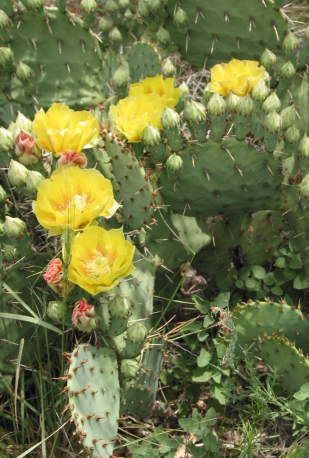
Springtime in Texas means wildflowers.

Lots and lots and LOTS of wildflowers, which are especially visible when one goes on a roadtrip. Having been on a couple of roadtrips in the past couple of weeks, I got to see lots of wildflowers. Easter weekend, the bluebonnets were still fairly thick along the roadsides--this wasn't a particularly good bluebonnet year because it was a dry winter--and the evening primroses were going pretty strong. (In Texas, most primroses are pink, shading to white, with very, very few yellow ones turning up--which are generally called sundrops.) This past weekend, the bluebonnets are almost gone, but the primroses are still out and the yuccas have begun to bloom in the places where they've gotten a little water, along with various sunflowers, tickseed and blanket flowers. There will be wildflowers all summer of one variety or another.

I don't know that the wildflowers are such a great inspiration to my writing, but I do enjoy them. I take lots of pictures of them, and sometimes I paint them. They're an inspiration for my heart and soul. They make me feel good.

And I think as writers--as human beings--we need that kind of thing. Stuff that just makes us feel good. Things we don't have to feed or pick up after or talk to, that we can just look at and enjoy. All those other things, like pets and children and spouses, are tremendously important too. They are, I think, the primary inspirations in our lives. But sometimes, you just have to stop and smell the flowers. Even if you do have to be careful of the thorns and the prickles. ;)

What kinds of things make you smile?

Thursday, April 27, 2006

Writing What -- and Where -- You Know

Several years ago, after A WOMAN’S HEART -- which would turn out to be the first book in my Irish trilogy -- came out, my son called me from a hotel in Florida. He’d just finished it, and having spent some time traveling around Ireland on his way to and from college at Oxford, he’d recognized many of the locations and thought I’d captured the scenery well. Since I’m one of those writers who believes in setting as character, I was pleased he enjoyed that part of the book.

Then he asked me how I’d nailed the Irish brogue so well. Had I, he wondered, recorded conversations during my trips to Ireland? Well, I hadn’t and his question surprised me because dialogue is one of those things I never really give a great deal of thought to. I just mostly write down the voices I’m hearing in my head. (Which is a lot cheaper than a psychiatrist and less emotionally exhausting than an exorcist. )

After I thought about it a bit, I remembered being sent to speech therapy in the second grade because no one in Southern Oregon ranching country could understand the West Irish brogue I’d picked up from my grandfather and mother. (Actually, my mother’s accent had a decided Brooklyn flair, which, when she got excited, made her even more incomprehensible.) I brought this up with my editor who said, “Well, that explains it, JoAnn. It’s your first language.” I’d never considered that before, but I thought then, and still believe, that she was right. It also may explain how, to this day, whenever I get really tired or irritated, my syntax suddenly turns Irish on me. You’ve no idea how many newly married arguments ended when I’d be trying to yell at my husband for something he’d done and he’d start laughing and say, “What the hell did you just say?”

I enjoy writing the Irish books because I know those people. They’re my family, and Brady, my heroine’s storyteller father in A WOMAN’S HEART is pretty much my own Granda McLaughlin, including the part about him kidnapping the woman he loved (my grandmother, with her permission) so her wealthier Irish family would be forced to let them get married. I feel as if I’ve come home whenever my plane lands at Shannon airport, so it’s a natural thing to place books there.

About eight years ago, we were about to buy a house in Dungarven, on the Southern coast of Ireland, when we discovered the government was actually serious about their six month pet quarantine. Since boarding my then ancient dog and equally ancient and very insane Siamese kitty wasn’t an option, the deal fell through, and looking for a new home, I landed here in East TN, which is the greenest place I could find in America. It reminds me a great deal of Ireland (except it has trees), which probably makes sense because the same mountains I receive inspiration from every day are, in fact, connected beneath the Atlantic to Ireland. It wasn’t until I moved to the South that I began to hear all the expressions I grew up with; family sayings that no one else I knew out west ever used. This is partly why, I suppose, I also feel equally comfortable putting books in the South.

So why is IMPULSE, my upcoming book, set in Wyoming? Well, because when Katrina hit the Gulf, I working on a book set in New Orleans featuring – oops – a killer hurricane, crooked cops, corrupt politicians, the mob, and a battle between good and bad voodoo. Not knowing at the time if the city would even be livable on the book’s May 23rd publication date, I came up with a new story set in Wyoming featuring a haunted hero, a hunted heroine, and a serial killer who thinks of himself as the “Man who was once the boy raised by wolves.” (For some dynamite Wyoming scenery, check out the killer video trailer at my website and be sure to turn up your sound to get the full chilling effect!) From a Southern hurricane to a Wyoming blizzard may seem like a bit of a leap, but having grown up in ranching country, I know Wyoming, and was able to make the shift.

But the one thing I’ve never been able to do is write about a place where I haven’t spent a great deal of time. Sure, the Internet offers myriad research opportunities, but I’ve always found that the people make a place. And given that my characters always come before my plots, I need to have a real handle on what makes them tick. And not just their day-to-day lives, but the entire history and backstory of their “people,” as we say down here.

I recently spent a week aboard an Authors at Sea cruise along the “Mexican Riviera” and listened to people planning stories they wanted to put in the cities – Mazatlan, Puerto Vallarta, Cabo San Lucas – we visited. But while I enjoyed the opportunity to cruise with readers and writer pals, everything was too new to me, and our time too short, to even tempt my muses.

So, do y’all have a favorite setting for books? Ones where the stories and characters speak to something deep inside you and make you feel as if you’ve been transported there? Maybe even lived there in another life? Or are you more a reading gypsy, happy to go wherever a writer’s muse takes you, discovering new and exciting places?

FROM A RELIABLE SOURCE

Agent Hilary Rubin has left Trident Media Group to become an Associate Editor at St. Martin's, effective May 3rd.
Holly Henderson Root will take over Hilary's position as audio rights agent at Trident.

Wednesday, April 26, 2006

In Praise of Jane

I can’t remember when I first became aware of Jane Austen’s work--probably back when I was in elementary school and read every book I could get my hands on (I was one of those kids who always checked out the maximum number of books allowed, then devoured them as quickly as I could). My enjoyment of her stories extends to the various movie and TV versions. Some I enjoy more than others, but I can’t think of one that isn’t worth watching. It’s always a pleasure to “spend time” in Regency England!

Despite the fact that I own--and have watched many times--both the A&E and BBC versions of Pride and Prejudice on DVD, it’s probably been close to 20 years since I actually read the book. I’d been considering reading it again (before I bought the new movie version on DVD), when I noticed that the local library was starting a reading group--and the first book to be read was Pride and Prejudice. Since I’d been looking for something that would get me away from my computer and around other people every so often, I signed up, dug out my copy of P&P and started reading.

Don’t ask me how, but I’d forgotten what a fantastic writer Jane Austen was. The DVDs are good, but there’s so much in the book that simply cannot make it into a film version. I soon found myself enmeshed in Lizzie Bennett’s’ world, loving every moment of it. It was hard to putting the book down, and I was sorry it was over when I’d finished reading it.

I can’t think of higher praise for a book than that!

The reading group discussion was fun, and it was interesting to hear what the others had to say about the book. I was surprised that several of them had never read Austen’s work--even more so that several didn’t finish because they couldn’t get into it (that shouldn’t have surprised me--I know everyone’s tastes are different--maybe my enthusiasm got in the way of my brain :-) ).

The one thing that stood out, however, was how many of us thought the book showed how little human nature has changed. IMO, that--along with Austen’s writing style and voice--helps explain why her work remains “readable" and relevant (anyone read Emma and watch the movie Clueless?).

What I got out of this experience, besides the pleasure of an enjoyable read and a lively book discussion, was that as a writer of historical romances I need to keep that in mind. Settings and situations may change, but human nature essentially remains the same. To keep a story set in the 12th century relevant to present-day readers, I need to show that my characters are real people with recognizable flaws and strengths--they just happen to live in a different time.

For me, that’s one of the neatest things about reading and writing.


I’ve been lax lately about reading classic romances as well as newly-published ones (let’s face it, there are a lot of good books coming out every week!), but that’s about to change. At the bookstore yesterday, along with Kerrelyn Sparks’ Vamps and the City and Gaelen Foley’s His Wicked Kiss, I picked up a copy of Jane Austen’s Persuasion.

Three yummy books to choose from . . . I’d better be good, maybe drag out my timer and sit myself down at the computer asap. Otherwise I won’t get anything done on my own work!

Tuesday, April 25, 2006

First Day of School


I've heard authors compare seeing their books published to giving birth to their children. I've never given birth, but I have had books published, and there do seem to be similarities to the process. Both involve growth and development that goes on inside, so that it's a very private, personal thing, and then with great effort and pain, your offspring enters the world. There's a lot of waiting and anxiety. Sometimes there are even cravings (I can't be the only person who craves certain snacks while writing on deadline). I guess the biggest difference between having a baby and having a book is that with a book you can usually see your own feet most of the time, unless you overdo it on the deadline snack cravings.

To stretch the metaphor to the breaking point, I think the day your book goes on sale must be what it's like to send your child off to school for the first time. You've done everything you can to prepare him, and now it's out of your hands. You hope he'll get a nice teacher who takes the effort to put him in a good seat where he can see the board and hear the teacher, maybe near some kids who will be a good influence on him. You hope the other kids will like him and be nice to him, and you hope he'll make friends. You hope he represents you well, reflecting well on what you taught him. Good grades and good conduct scores would be nice.

With a book, by the time it reaches the shelves, it's out of your hands. You've sweated over all those words, proof-read them, copy-edited them, checked and double-checked, but now you're sending it out into the world where it's out of your control. You hope the booksellers will be nice and put the book in a good spot where people will see it, near other books that may draw attention, but not so much attention that your book will be eclipsed. You hope readers like it and buy it, and you hope it will make friends out of them who want to come back for more. You hope it represents you well in the marketplace, and you hope it performs well, getting good enough sales that your publisher is pleased.

I get nervous before the release of each book, and I was surprised to find out that my editor feels the same way as each of the books she works on goes to market. She said that of course she thinks the books are good, because she chose them and she worked on them, but then there's some worry about what others will think. As Colleen said the other day, putting a book out does make you feel vulnerable. You're opening yourself to criticism, evaluation and judgment.

My latest baby is going out into the world today, so I hope it makes new friends and is loved and accepted. If you see it out there, please be kind!

Sunday, April 23, 2006

Real-life Romance

One of the persistent complaints of the intelligentsia about romance novels is "They're not real."

My response: "Oh yeah?"

Okay, not the most eloquent defense, and of course, all fiction has its elements of fantasy-unreality, but that lack of realism accusation seems to target one of the inherent romance reader expectations: the happy ending.

Happy endings aren't real? Baloney.

Today is the thirtieth anniversary of my wedding. Yep, I have been married to the same man for thirty years. Since we were both twenty-one. (Our birthdays are so close together, we don't even have separate ones any more. One week doesn't make much of a difference.) He's lost a whole headful of hair. Mine's gone from almost black to a lovely shade of pewter (or maybe silver). But he's still my middle-aged knight in shining armor. (Well, it might need a little armor polish these days--it's seen a lot of use...)

Not all romance writers get a happy ending, but many of us do. Some of us have to try more than once. I lucked out with my guy--but then, as I've told my children, the very best relationships are with those you're friends with first, then realize there's an extra spark. One reason why I love those "best friend" romances so much.

I personally think that a person is more likely to find a happy ending if they believe those happy endings are possible. If you're always waiting for the other shoe to drop, isn't it going to happen, sooner or later? Romances are about that belief, that possibility, that love is out there, and that it can last forever. Or at least for as long as we've got.

My fella is good at the romantic stuff, and he's the kind of guy who says "Gail, if you like both dresses, you should buy both dresses," but the real reason I love him so much... Years ago, before I ever sold a book, I was sitting at the dining table writing, and he asked what I was working on. I told him it was a new story. He said, "Oh good. I'd noticed you hadn't been writing for a couple of months, and I was starting to worry about you."

I'm hanging onto this guy for another thirty years. And then some.

Naked in Public


Do you ever have one of those dreams where you’re naked in public? It’s a common enough theme, and you don’t have to be Freud to figure out it’s all about the fear of exposure – of having people see the real you that lurks beneath the social masks we wear.

In some ways, novelists live that nightmare every day. Our books contain the blueprints of our real passions, recurring themes acted out by characters we’ve spent months or years animating with our efforts. Often, these characters say things or do things we never would (at least in public) – things that would horrify our families, coworkers, and old Sunday school teachers. To effectively write the book, we must push this out of mind and “channel” the characters without fear of the reaction of others.

In my case, this “amnesia” usually lasts all the way up until the book’s release. My debut effort was the hardest. About two days before the novel (a historical romance with one of the old-fashioned “bodice-ripper” covers) came out, I became convinced that I was going to end up in stocks in the public square, fired from my teaching job (even though I wrote under a pseudonym at the time, a newspaper article came out two days before the release and “outted” me), or worst of all, laughed at for something I cared about so much, it made my heart ache.

As it turned out, most people were genuinely thrilled for me. Publishing a first novel is a remarkable achievement, one widely celebrated and supported. This support – and the wonderful advent of fan mail - counterbalanced the few remarks that made it to my ears, including surprise that I could have written the book’s love scenes (a lot of people have the curious idea that teachers are asexual), a few armchair critics, etc. But nobody led me to the stocks, and my job remained secure until I chose to leave the classroom to devote more time to writing.

Next week, I celebrate the release of my tenth book, The Deadliest Denial, and there’s no use playing it cool and pretending. I’ll admit it here. While writing it, I held not one thing back. I poured heart and soul into this story of love and loyalty stretched to its limits – and toward it, I feel the fierce, protective passion a new mother feels for what poet Anne Bradstreet once called “thou ill-formed child of my feeble brain.”

Next week, we’re stepping forward, this child and I, together. Naked in public, and exposed.

But I like to think that in honor of this tenth outing, we’ll both be holding our heads high.

Friday, April 21, 2006

Patience, please!

I once bought a greeting card I still own because it fits me to a tee. This is what it says:

Lord grant me patience...
And hurry up!

That’s me— impatient and wishing I weren’t, but unable to change. Naturally, I chose to be a novelist, a career that requires infinite patience! But oddly enough, it suits me well. Lately I’ve been mulling this over. How can someone who wants everything yesterday be not only content, but passionately happy as a writer? I have come to realize that I am not impatient about all things. I can wait for and work steadily toward those things that really matter to me. (I’m not talking health stuff here. When someone I love needs immediate medical attention, I get pushy and very impatient. Grrr.)

But writing? For that I am willing, even eager, to roll up my sleeves, plant my behind in the chair, and do what it takes, often spending months to flesh out a story. That said, I wouldn’t be honest unless I admitted that impatience usually does strike within the first three chapters, when I am unsure of my characters and the direction of the story. (The synopsis can help, but not always). Then I yearn to jump to where I think my characters ought to be. But my books are character-driven, so skipping ahead doesn’t work. For a few days and sometimes up to a full week, I find myself unable to move forward at all. That’s when I mentally stamp my foot (the perfect picture of impatience), pull out my hair and bemoan my lack of progress. During this unpleasant time my family tiptoes around me, but we’ve been through this before, and they know the bad mood will pass. Sometime during this “dark” period I remind myself to take baby steps. That is the way a story unfolds, slowly, one sentence, one paragraph, one scene at a time. When I finally remember that (why I keep forgetting is beyond me!), the impatience fades, my mood improves, and I can proceed.

Anybody else out there impatient? If so, whether you’re a writer, a reader or both, how do you curb that impatience when writing or reading a book?

Thursday, April 20, 2006

Research Can Be Fun

Some friends and acquaintances have said that it must be nice writing fiction because I don’t have to do the research nonfiction requires. They have no idea.

For example, the setting requires research, maybe a visit. I have to acquaint myself with the geography, the scenery and the architecture--sometimes the colloquialisms and accent. Even when I choose a familiar setting, such as Maine, where I live, I have questions during the process of writing the book.

Recently, I’ve moved my stories onto a larger stage. In Breaking All the Rules, the hero and heroine go from Washington to New York City to a private Caribbean island. I had a lot of fun with creating the proper mood and details to make those places come alive. My August release, Deadly Memories, takes place in Italy, a country I haven't visited in many years. To research that setting, I sampled Italian wine and food (yum!), borrowed guide books and maps from my sister-in-law, and read books set in Italy. If you haven't read the mystery author Donna Leon, do pick up her books. Her detective is a Venice commissario, or police investigator. Not only are the mysteries intriguing, but you are immersed in Venetian culture and ambience.

I keep folders for the various topics needed for a given book, not just for the settings. Breaking All the Rules required folders on New York City, arms dealing, stolen uranium, luxury yachts, Caribbean plants and geology, and high-tech surveillance devices. For Deadly Memories I needed information on amnesia, the Italian language and slang, weapons-grade uranium, Etruscan tombs, and of course food and wine.

The Internet has made researching anything so easy that it's tempting not to do first-hand fact finding, like interviews and on-site visits. But there's nothing like being there to acquaint yourself with a place and people. In my next project, my museum-director heroine and adventurer hero must return a cursed Mayan figure to its temple in Central America. I've always been fascinated with the Maya, so it seemed logical to take a trip. My husband and I visited the Riviera Maya, with guided tours to two ancient ruin sites, Chichen Itzá and Cobá, as well as to a primitive village in the jungle of the Yucatan. Websites and books couldn't have given me the smells, sounds, and tastes of the region, nor the acquaintance of the smiling, friendly Mayan people. Think I was jazzed to write that book when I return? You bet!

Research is necessary for authenticity, but can be a trap. A writer must be careful not to make the book a dump for all she’s learned. The story is the characters and the plot, not the research. But you’d be amazed at the trivia I’ve accumulated!

Susan Vaughan

Wednesday, April 19, 2006

Aargh, the edits have landed

Aargh! This post is awfully late and I apologize. My copy edits for one of my September books arrived yesterday. And are due back Friday. Including travel time. Eek! So I'm taking a quick break to blog as my edits are the top of my "to be read" pile right now.

These are my second set of copy edits for a print book, and I am trying to devise "the system" for doing them. So far I've discovered I really didn't keep good enough notes while I write the book in the first place. Some of those nit-picky points about world-building--well, they're in my head, and in the manuscript (somewhere) but are they in a nice, orderly place I can find them? No.

Last month I blogged a bit about devising a system to create a book--a big work in progress for me. I'm not good with systems. Stephanie's post about tax time made me smile--I wish I had my receipts in a box. Mine are scattered on the floor of the spare bedroom. They were "neatly organized" before I stepped on a pile and went skidding across the floor. Next year I might move up to the box!

As for the copy edits, I am trying to be systematic. I make my change on a post-it. Think about it. Then change on computer. Then print that out. Think about it more. Then finally, when I get the courage, I pick up the eraser or the red pencil and actually commit to the change. I still find it scary to think this big, momentous 'last chance to change' has to happen so fast. On the other hand, it cuts down on the navel-gazing.

Well, back to edits. And if anyone has some great tips, I love to hear them!

Tuesday, April 18, 2006

Champagne, Confetti and Congrats...

to Lois Winston, whose Talk Gertie to Me is in bookstores now, for making her second sale.
Dorchester is buying the romantic suspense with a release date sometime in late 2007. The book originally came to life as her very first writing attempt--a 50,000 word romance that spanned 35 years. It went through a decade of major revisions and three title changes but she loved the characters and story and kept coming back to them until, as Lois says, "I finally got it right."

Friday, April 14, 2006

Google Me Curious

Disclaimer: This post represents only its author's opinion, not the opinion of the 2 B Read participants, this blog, or RWA.

Various writers' groups have come out swinging against Google Book Search. The general idea of Google Book Search is to give potential readers the opportunity to search through books for specific terms and view those instances in context. The primary issue the writers' groups -- and some publishing houses -- seem to be up in arms about is the "unauthorized copying" of copyrighted texts. Meanwhile, some major universities and some publishing houses have given Google permission to scan their texts, which is a major boon for researchers and scholars.

Some writers' groups have extrapolated beyond this immediate issue and sound almost alarmist in their language. A recent article in the Romance Writers of America Romance Writers Report outlines one of the arguments given by Paul Aiken of Authors Guild in testimony before a subcommittee on COmmerce, Trade and Consumer Protection, then concludes with the tantalizing question: "Who is going to buy a book if they can get it for free off the Internet?"

Having spend a decade in the technology industry and knowing how easy it is for a new technology to be either misunderstood or misrepresented, I decided to go see what was going on with Google Book Search. I spent a morning searching various terms (of course, I had to check on terms I knew were used in my own book published last March, just for grins) and decided the ultimate test would be to search on the term "romance." When Julie Beard's excellent The Complete Idiot's Guide to Romance Writing appeared as one of the books I could "browse," I clicked it. I have that book, and know that the word "romance" appears on almost every page. Would I be able to read or print or download vast numbers of pages?

Ah... no. I wasn't.

Here's what I found:
  • I could view an entire page where the term "romance" appeared, but only because the publisher had given Google permission to display an entire page. (Other books allowed only a "snippet" of three lines to be displayed, because the publisher had not given Google permission to display the entire page. This is explained in the help files.)

  • Even when viewing an entire page, I couldn't print the book page. I could print everything around the place where the copyrighted text was, but the copyrighted text itself was not printed.

  • While there were over 200 instances of the word "romance" in Julie Beard's book, I was allowed to view only a few of them before Google told me, in an oblique way, that I'd seen enough.
What we're missing, I think, is a rational dialogue among writers, publishers, and Google. Conversations in court usually generate more heat than light, and I have to say that I fault Google for not sending an envoy to every major writers' organization to present their case and explain how Google Book Search can be beneficial to copyright holders. That one action could have defused a lot of the ire and fear from the get-go.

But since that didn't happen, let's talk. What do you think about Google Book Search? Is it a useful tool for readers or a threat to writers' livelihoods?

Champagne, Confetti and Congrats...

to Colleen Thompson whose FADE THE HEAT was chosen by Dorchester to be given away in a marketing blitz where they partnered with Cupid.com to co-host "speed-dating" events in NYC, Washington, D.C., Atlanta, Chicago and San Francisco. Colleen was invited to give dating tips for men and women, which were included in goodie bags for the participants. One of her tips was used in a Publisher's Weekly article on the topic. Colleen interviewed some of her single, dating friends. Check out the PW article here:
http://www.publishersweekly.com/article/CA6324585.html

Champagne, Confetti and Congrats...

to Sandra Marton on the news that THE SICILIAN MARRIAGE won the Reviewers Choice Award for Best Harlequin Presents of 2005.

Champagne, Confetti and Congrats...

to Mia Zachary, for her two week (so far) appearance on the Bookscan Top 100 Romance bestsellers with her April Blaze, AFTERNOON DELIGHT. The book is also a 4.5 Star RT top pick.

Wednesday, April 12, 2006

Creative Process

The creative process is a strange one, and it never happens in quite the same way for me. I've been struggling with the first chapters of my first druid vampire book in the world I've developed. I don't know -- maybe I was thinking too hard about it because last night I developed a horrible headache.

I took ibuprophen and ended up going to bed at 9:00. But even in bed, my mind wouldn't settle down and I kept thinking about my plot and whirling it around my fantasy elements though my head was throbbing. I got hot flashes, kept throwing off the covers, flopping around in bed, putting my pillow over my head in an attempt to try to ease the pain behind my eyes, then getting cold and cuddling next to my husband, only to complain that he was making me sweat and pushing him away. I was driving him nuts -- as well as myself!

Finally, I fell to sleep. And when I woke up, my headache was gone and I felt so refreshed. What's more, I knew what was wrong with my plot, and knew exactly how I was going to approach the story! So I've been writing like mad today, fixing my world and writing down the outline to my story -- and I'm very excited.

Also, I've been searching the 'Net, trying to find a good English to Celt Dictionary. I finally found an Online Etymology Dictionary that explains the origin of English words, which I absolutely love. And I've found quite a few Celt and Anglo-Saxon words in it. Still, it's time consuming weeding through all the Latin and other origins I don't want. But I might have to fall back on some Latin roots. I want to "flavor" the book throughout by having my druids say some Celt words.

When I'm done, I'll probably set up a page on my official website with all the terminology and roots in case anyone is interested, at gloriaharchar.com.

That's the report from the salt mines!

Tuesday, April 11, 2006

Runner's high vs. writer's high


On Saturday, I ran my first 5K (3.1 miles) race ever--in the rain! I don't love to run; I do it strictly for exercise and the race was really just a way to trick myself into pushing my middle-aged body a bit harder. My goal was simple: to run the whole way, hills included (no walking allowed, no matter how much my muscles and lungs complained). And I wanted, just once, to feel the famous "runner's high".

So how'd I do? Well, I did indeed run the whole way and I finished four minutes faster than my best training time. I crossed the finish line to the loud cheers of my husband and friends, who I think were amazed that I really did it. Then I went home, took a hot shower, and fell asleep on the couch. No adrenalin or endorphin or whatever it's supposed to be rush. No high of any kind. Just a strong sense of relief that I could take a vacation from the tyranny of the treadmill for a week, the reward I'd promised myself.

I couldn't help contrasting that with writing. Yes, there are times I long to escape the equally tyrannical word processor, days when I feel I'm dragging every word out of my brain with a blunt pair of pliers. Then there are other miraculous days when I sit down at my keyboard and look up fifteen frenzied pages later to discover it's time to pick up the children from school. I'm smiling for the rest of the day.

Even greater is the high when I type those two wonderful little words: The End. Of course I delete them before I send the manuscript to my agent or editor but I wouldn't miss keying in those six letters for all the ink in New York City. Last week, I finished the first draft of my romantic suspense novel and the sense of accomplishment was beyond description. I completely embarassed my sixteen-year-old daughter (always fun to do) by dancing down the sidewalk on our way to the orthodontist's office. My joy was just too great to contain in my body; I had to express it outwardly.

Now I'm revising the manscript and that too gives me a rush. There are plenty of things that need fixing but there is also the thrill of reading a line of dialogue or a descriptive phrase so good that I can't believe I wrote it.

I guess some of us are born to run, and some of us are born to write.

What gives you your greatest "high"?

Sunday, April 09, 2006

Dreamstorming

I've been to two writing conferences in 11 days and I'm exhausted. I literally walked into my house about six minutes ago and realized I had to blog. Since I also have to grocery shop for the family and find some of that fabulous Airborne (?) that someone at the second conference introduced me to (I was sneezing and throaty and miserable, but the conference was still great), I'm blogging now or I'll forget.

I was fully inducted into the concept of dreamstorming by Robert Olen Butler at the conference I went to ten days ago in New Orleans. The idea is to dip deep into the unconcious mind, without censoring, allowing scenes and snippets of the story to come to you as they will (in order or not). You capture these scenes with single lines (on 3x5 cards is Butler's preferred way). Butler dreamstorms for months before he begins to write. I don't have that luxury of time--my agent wants my new book idea ASAP.

I've done a little dreamstorming in the few days I was home between conferences, and I felt was I was going places that I might not have gone in the story if I were to be so focused on getting from beginning to end, as I usually am when I create my skeletal plot synopses. But on five hour drive home from the conference I attended this weekend, I dared to turn off the radio and dreamstorm the whole trip. Wow!

All I can say is, I was lucky to be traveling the interstate early on Sunday, when it wasn't busy, because I was a little surprised when the familiar landmarks of home appeared so soon :-).

The downside to dreamstorming while driving is there is not recording on the 3x5 cards. But I can do that tonight. After I shop for the family. And take some Airborne to help me get rid of this stubborn spring cold!

Kelly McClymer

Friday, April 07, 2006

The author removes her mask to reveal . . .


Recently, one of the local newspapers, The Missoula Independent, did a feature article about my fledgling career as a romance author. This was an interesting experience for me. Like most authors, I'm used to working in quiet anonimity. My friends know that I write romance novels, but when I'm walking down the street, the average person has no idea what I do.

That changed a bit last week. The Independent is a weekly, so for an entire week--the headline Write 'em Cowgirl appeared all over town, on top of a hunky, bare-chested cowboy reading a book. It was exciting and a little (okay a lot) weird.

Doing the interview was also a new experience for me. I've done a lot of online interviews where they send me questions and I can take my time writing answers. This was different. I sat in the conference room with the reporter--who had done his research on the romance industry, had read my books and studied my website--while he tossed questions at me ranging from my interest in Girl Scouts to why the sex in my stories is so explicit.

Writing fiction is a very personal thing, so answering questions about writing means that you are revealing a lot about yourself. I tried to be honest and open. I also tried not to say anything that would be completely mortifying to my teenage daughters who also live in this town. Did I pull it off? I don't know. You can read the article and see for yourself.

It's funny in a way that this should seem so awkward to me because I reveal much more about myself every day when I write my fiction. Of course, I get to wear the mask of my various characters, but good fiction requires the author to put her emotions out there for the world to see. If you hold back, the story suffers. The mask, the props and the setting all work to keep the author hidden--like the Wizard of Oz shouting, "pay no attention to the man behind the curtain." I think the article reveals a very ordinary woman, leading a quiet life behind the curtain so that her characters can come to life on the stage.

Champagne, Confetti and Congrats...

to the following finalists in the First Coast Romance Writers Beacon contest:
Ann Macela, THE OLDEST KIND OF MAGIC, Best First Book
Kelley St. John, GOOD GIRLS DON'T, Long Contemporary
Heidi Betts, WHEN THE LIGHTS GO DOWN, Short Contemporary
Susan Squires, THE HUNGER, Paranormal
Shane Bolks, THE GOOD, THE BAD AND THE UGLY MEN I'VE DATED, Chick Lit

Champagne, Confetti and Congrats...

to Bonnie Spidle, who is sitting in the corner, glowing quietly over the news that her current release, HARD STUFF, has just gone for a second printing.

Thursday, April 06, 2006

Why Does Everything Always Happen at Once?

Wow! Congratulations to all the authors who've received such wonderful news lately! It's exciting to be amongst such company. (And maybe if I'd entered some of those contests, I'd be even more amongst them--then again, maybe not. C'est la vie.)

I'm sitting here looking at the clutter already invading the top of my new desk, trying not to think about all the things I have to do. Revisions on The Eternal Rose arrived last week, and while I have until my editor comes back from maternity leave to finish them (knock on wood that she comes back!), I hate having them sit around that long. I also have suggestions from my agent for revising the option book, and since they're good suggestions, I imagine I'll be getting to those fairly soon. And then there's all the stuff I need to do in my "real" life.

Somehow, everything has piled in at once. Not only do I still have (Um, wait, counting) about 7 books yet to read by the end of next week for the various published contests I agreed to judge (I read 14 books for the Rita. These are other contests.), I have a lot of other stuff going on.

There's a luncheon for the local "Art" club Friday and it's my turn to help host--vegetable slicing and decorating later this afternoon. Then when that's over, I get to help decorate for a wedding shower that I'm helping to host for the daughter of a dear friend. Fortunately, I was nominated to pick up the gift, so that's done. I don't have to provide any of the food or decor. The shower is Saturday morning, then I have to cook for all the college students we're having over for Sunday dinner. Oh, and there's a "quilt block of the month" class I'd like to squeeze in before the shower, with the block yet to be sewn up. And the lady who cleans my house was sick this week.

I've gotten fairly good about saying "no." Especially since the last son toddled off to college this year, but somehow, stuff still stacks up. And I know people work full time jobs and do all this stuff, but I've never been very good at keeping up with things. Adding writing in just makes me crazier. And it keeps me sane.

I suppose I'm blogging about all this--well, to whine. And to show that writers live the same, crazy, hectic sorts of lives as the rest of the universe. And because I could think of absolutely nothing else to blog about. Go read The Barbed Rose. It's a lot more interesting. :)

Champagne, Confetti and Congrats...

to the following Holt Medallion Finalists:
Kelley St. John, GOOD GIRLS DON'T
Roxanne St. Clair, KILLER CURVES, in the Romantic Suspense category
Roxanne St. Clair, WHEN THE EARTH MOVES, in the Short Contemporary category
Kerrilyn Sparks, HOW TO MARRY A MILLIONAIRE VAMPIRE, in the Paranormal category.
Cheryl Bolen, ONE GOLDEN RING, in the Short Historical category
Jackie Kramer, WARRIOR'S HEART, in the Short Contemporary category

Champagne, Confetti and Congrats...

to Sylvia Day for the sale of two more single title books to Avon. Watch for the first, a May 07 release titled MY IMMORTAL. The second will be a sequel and is scheduled for release the following December.

Champagne, Confetti and Congrats...

to Kelly Mcclymer whose young adult novel, THE SALEM WITCH TRYOUTS, was chosen for the Scholastic teen order form. Since nearly all grown up booklovers remember, with fondness, ordering books from Scholastic back in our schooldays, we shouldn't be surprised that Kelly plans to snag a copy of the book order form and frame it and hang it on her office wall.

Wednesday, April 05, 2006

Soul Mates, Reincarnation and Romance

I enjoy a lot of different types of romances, but I confess I particularly like it when the author lets me know that hero and heroine are soul mates. Maybe it's because I'm a diehard romantic who believes that there's someone out there that we resonate with more closely than we do with anyone else. Or maybe it has to do with the idea of belonging to someone in a special way. I'm not really certain of the whys, I just know I love reading those types of stories.

In the last year or so, though, I've been seeing readers on bulletin boards and blogs commenting in a negative way about the idea of soul mates in romance fiction. The reason seems to be universal--they feel the author is taking a shortcut because there's no building of the relationship.

Recently, I wrote my own version of a soul mate romance--Through a Crimson Veil--and saw comments about how I didn't "cheat." And the people who said that seemed surprised, which surprised me.

My take on soul mates isn't that the hero and heroine catch one glimpse of each other and fall instantly in love. It doesn't matter if they've loved this other soul in life after life, when they meet in this life neither the hero nor the heroine are a blank slate. They've lived, they've had childhoods and survived adolescence and young adulthood, that means they have baggage just like every other human being. It means they're going to share the same fear of falling in love that almost every other human being has. That this other person is a soul mate doesn't mitigate how scary it can be to feel something as deep as love.

Being soul mates is also no guarantee that a couple will choose to be together. Being half of a pair of soul mates doesn't negate free will. Of course, since this is romance we're writing, there will be a happy ending, but because I believe in torturing my characters, they're not necessarily going to reach it easily. :-)

In Crimson Veil, I even used the heroine's anticipation of instant rapport as a plot point. Mika knows Conor is her soul mate before they meet, so she expects him to realize immediately that she's The One even if he doesn't understand why. She quickly learns, however, that she's going to have to get to know him, and they're both going to have overcome their pasts if they want a future. No easy task because their respective lives have left them very different from each other in their views and their behavior.

Soul mates are probably a big enough topic for one blog posting, but I'm going to bring reincarnation into it too since, for me at least, they are permanently linked.

I love reincarnation romance, but it's so seldom handled well. Sometimes I wonder what kind of research the author has done because so little of it matches anything I've read on the topic, and believe me, I've read a lot! But when it's done well, the story becomes extra special. Linda Howard's "Lake of Dreams" in the Everlasting anthology might be the best reincarnation romance ever. IMO, of course.

Since the hero and heroine usually have had at least one past life together, this fits in with the soul mate idea, but the extra component I like is that not only are the hero and heroine dealing with their baggage from this life, in reincarnation romance they're also dealing with something from a past life as well.

In "Lake of Dreams," the heroine has seen how she's died in many lives, and from what she's dreamed, it always seems to be at the hero's hands. Now she's met him again, she's fallen for him, and she's trying to beat what seems to be the fated conclusion of their incarnations. The suspense is whether or not she'll be successful and they'll have their happy ending in this life at last. If you haven't read this novella, I highly recommend it. Along with being a fabulous reincarnation romance, I also believe it might be the best anthology story ever. That short format is tough!

Do I need to mention that I've always wanted to write a reincarnation romance? :-) I did it too and I used this past life to cause conflict between my hero and heroine. If Mika and Conor thought being soul mates was difficult, they got off easy compared to Kendall and Wyatt. :-) In Eternal Nights not only are the hero and heroine dealing with Kendall's baggage from a nomadic childhood where she was forced to be the adult instead of her mother, but they're also dealing with things held over from a past life. Wyatt remembers this life, but Kendall doesn't know why she's attracted to the temple or why Wyatt hates that damn pyramid. And as the story progresses, this thread becomes a bigger issue.

Are the leftovers from their past life the main conflict? No, there's plenty of this life issues to play that role, but it's a nice secondary conflict and one I like to think adds to what they're already dealing with.

Reincarnation and soul mates can make for a very compelling theme in any romance story, but writers need to do their research. Check out the New Age section at the bookstore or check out the metaphysical section at the library and read a few books on the subject if you want to use this idea. It's interesting reading and might just spark some unexpected plot threads. And if you do use it, don't forget your characters still need to work for their happy ending. Readers shouldn't feel as if they missed the "good stuff."

So no shortcuts, no love at first sight. To quote Wyatt, "more like intrigued at first sight."

Patti O'Shea
www.pattioshea.com

Through a Crimson Veil - Out Now
Eternal Nights - August 2006

Tuesday, April 04, 2006

TODAY IS GERTIE DAY!

Never heard of it? I’m using my blogging debut on this site to declare today, April 4, 2006, an unofficial holiday. Unofficial because you have to go through all sorts of legal mumbo-jumbo and expense to declare an official holiday. Besides, in the greater scheme of things, Gertie Day will mean little to most people. To me, it’s the first day in the rest of my life as a published author. Today, TALK GERTIE TO ME, my debut novel, is on store shelves from Petaluma to Paramus. (Actually, many stores wound up shelving it last week, but today is the official release date according to my publisher.)

To be honest, there were times when I thought I’d never see this day. I wrote for ten years before I made a sale. Throughout those ten years, I had lots of positive feedback, won contests, landed an agent, but was never offered a contract, even when editors told me to my face how much they loved my books. I’m probably about to show my age here, but remember the character in Li’l Abner, the one with the black cloud that constantly hung over his head? That was me. Especially when I’d receive rejection letters that praised my writing, my story, my characters, etc. but would end with, “...but ultimately I didn’t fall in love with the book, and for that reason, I must pass on it.” Honestly, my agent never asked any of these editors to MARRY my books, just buy them!

But now I can walk into Borders or Barnes & Noble or many other bookstores, stand in front of a shelf of books, and see MY book. MY baby with its bright pink cover and dancing title, its heart-shaped Manhattan skyline snow globe, its wonderful author quote from Melissa Senate, and MY NAME in big, bold letters. And after a decade-long gestation period, the feeling is numbing, humbling, and surreal. To be honest, I still can’t believe it. I have proof -- a signed contract, a cashed advance check, author copies that arrived at my door a few weeks ago, TALK GERTIE TO ME on bookstore shelves. And it still feels like I’m standing on the outside, watching all of this happen to someone else. Or like it’s all a dream that I’ll wake up from at any moment.

I don’t know if other authors have ever felt this way. I’ve never heard anyone speak to this issue. Maybe I’m just weird. What I do know, though, is that I’ve become a poster person (I think it would be stretching it a bit to say poster ‘child’) for many as yet unpublished authors. There are some authors who write a book, secure an agent, and get offered a mega-bucks contract all within the course of a few months. Then there are the rest of us, the majority of us. If after ten years, I can walk into a bookstore and see my book on the shelves, the same can happen for many others. So the moral of my story, albeit trite, is DON’T EVER GIVE UP!

Champagne, Confetti and Congrats...

to Eve Silver on the sale of her near-future, action-adventure novel, Driven, to Dorchester.

Champagne, Confetti and Congrats...

to our fantastic finalists in the Colorado Award of Excellence competition.

The Flight Doctor's Lifeline by Laura Iding, Short Contemporary category
Marital Privilege by Ann Voss Peterson, Romanctic Suspense category
When The Lights Go Down by Heidi Betts, Short Contemporary category
Through a Crimson Veil by Patti O'Shea, Paranormal category
Blaze by JoAnn Ross, Romantic Suspense category
Unknown title (to me) by Victoria Alexander


Monday, April 03, 2006

Champagne, Confetti and Congrats

to our many PASIC finalists in the highly esteemed RITA competition for the best romantic books of 2005. (And Faye loaded the confetti with glitter for these latest celebrations.)

Best First Book Finalists
The Good, the Bad, and the Ugly Men I've Dated by Shane Bolks (0060773103) Avon Books
A Texas State of Mind by Ann Defee (0-373-75080-3) Harlequin Books
Show Her The Money by Stephanie Feagan (0373513542) Silhouette Books
Worth Every Risk by Dianna Love Snell (0-373-27426-2) Silhouette Books

Long Contemporary Romance Finalists
The Father Factor by Lilian Darcy (0-373-24090-x) Silhouette Books
A Texas State of Mind by Ann Defee (0-373-75080-3) Harlequin Books
Worth Every Risk by Dianna Love Snell (0-373-27426-2) Silhouette Books

Best Novella Finalists
“The Naked Truth about Guys” in The Naked Truth by Alesia Holliday (0-425-206149) Berkley Books

Best Regency Romance Finalists
A Reputable Rake by Diane Gaston (0263843912) Harlequin Mills & Boon Limited


Best Short Contemporary Romance Finalists
The Rich Stranger by Bronwyn Jameson (0373766807) Silhouette Books
The Rugged Loner by Bronwyn Jameson (0373766661) Silhouette Books
The Ruthless Groom by Bronwyn Jameson (0373766912) Silhouette Books

Best Short Historical Romance Finalists
When We Meet Again by Victoria Alexander (0060593199) Avon Books
The King's Mistress by Terri Brisbin (0373293356) Harlequin Books

Best Traditional Romance Finalists
Smart Boys & Fast Girls by Stephie Davis (843953985) Dorchester Publishing - Kate Seaver, editor
Who Needs Boys? by Stephie Davis (843953977) Dorchester Publishing


Sunday, April 02, 2006

when bad covers happen to good authors

It's kind of ironic to bring up the topic of bad covers when I happen to be really happy with the artwork for my next book. In fact, I've been really happy with all of my covers in recent memory.

But the cover flats for my May Silhouette Desire, MR. AND MISTRESS, just arrived, & while I was oohing & aahing over them, I couldn't help thinking, "Wow, I've gotten some really good covers lately. Thank goodness!" Which only prompted me to remember a time when I got a very "not good" cover & had no choice but to make the best of it.

I think that every author, at some point in her/his career, is going to get a lousy cover. Some are worse than others. Some are a little sweeter in the "lemon" department, making it somewhat easier to make lemonade. My personal "bad cover" was on my second historical for Leisure Books, A PROMISE OF ROSES. It was a good book, darn it--it deserved better. :-p

But, alas, it didn't just get a bad cover...it got a recycled cover.
That's right. The artwork that appeared on my July 2000 release had already appeared before on another historical romance ten years earlier. I knew it the minute I saw it. I knew which book, by which author. I had read that book. (In case you're wondering, it was Sue Rich's Rawhide & Roses from Pocket Books.) Except for the hair colors being the opposite of what they should have been (in the book, he had blond hair, she had black), the picture did suit my story, but that one small consolation didn't keep me from being crushed by the fact that I'd gotten a re-used cover on only my second published work. (Chances are, it would have bothered me at any point in my career, but it was a more bitter pill to swallow that early on.)

So what can authors do when they get a bad cover for a book they love? Well, they can't get it fixed, that's for sure. In most cases, by the time authors see their artwork, it's too late to change anything. But when Suzanne Brockmann got a chubby hero in dress whites on the cover of her "Tall, Dark, & Dangerous" Navy SEAL book, Get Lucky, she turned her lemon into lemonade by passing out smiley face stickers. At signings, she stuck them over the pudgy face of her "Pillsbury Doughboy" hero, & even mailed them to readers so they could do the same to any copies they spotted in local stores. When another author got a cover that reminded her a little too much of a bottle of Pepto Bismol, she started promoting it with the tag line, "Think Pink!" And when I got stuck with my pretty but recycled cover, I held a contest on my website to give away copies of both titles that had been gifted with that artwork--mine & Sue Rich's.

What else can good authors who get stuck with bad covers do? It's one more thing in this life that we can't control and shouldn't let ourselves lose too much sleep over. Yes, a bad cover can affect sales. But so can titles, distribution, the weather, the economy, etc., etc., etc.

I have been very lucky to have gotten really good covers for the majority of my books. And I celebrate each & every one, because you never know when that next clunker will arrive...when you'll be forced to buy stock in smiley face stickers, or create a new ad slogan, or go up to another author at a conference & introduce yourself as, "The other author who got your same cover." LOL

Oh, & just so you know, even good covers can prompt some fun word-of-mouth. Readers have dubbed my latest (pictured above), "Here, honey. Hold my purse while I fix my hair." :-D

P.S. As a special treat, I'll send autographed cover flats of the gorgeous (if I do say so myself :-)) artwork for MR. AND MISTRESS to the first 5 readers who send me an e-mail at heidi@heidibetts.com, with the subject header "2 B Read giveaway." Good luck!

And remember...please don't judge a book by its cover! :-D


Heidi Betts
www.HeidiBetts.com
MR. AND MISTRESS, Silhouette Desire #1723 -- coming May 2006!

Champagne, Confetti and Congrats...

...to Heidi Betts for her invitation to be a part of the Silhouette Desire continuity series, "Dakota Fortunes. She'll be doing the final book in the series (#6) due out June 2007.

Champagne, Confetti and Congrats...

to Shirley Jump who contracted for three books for Harlequin and two for Kensington in one afternoon. Is five sales in one afternoon a record??? Wow.

Saturday, April 01, 2006

Hope Springs Eternal (or am I the only nut out there?)

It’s spring -- the bulbs are blooming, birds are nesting, and I’m eyeing the empty flower pots in my garage, anxious to dig in the dirt. There’s something promising about spring flowers -- they look so colorful and healthy when I first plant them, so HOPEFUL. For once, I think, I’m going to have those vibrant, lush pots I always envision. My deck will overflow with flowers, the pots shimmering with cascading blooms. Of course, eventually the summer heat withers the flowers up, we get too much rain and they rot, or the Japanese beetles descend and shred them into lace. But now, in early spring I still nurture the illusion that this year, the flowers will thrive.

The same thing happens every time I start to write a new book. At the beginning, I’m creating a masterpiece. I love my characters. Their journey beckons to me, intrigues me. And I know I’m going to get it “right” this time -- it will be so emotional, so sexy, so riveting. But then reality sets in and I can’t seem to match my meager skills to the perfection I see in my mind.

Which leads to my great obsession: revising. I’m addicted to revising. I have to confess that I love it -- tinkering with words, rewriting sentences over and over... trying to get that vision in my head onto the blasted page. Revising is the fun part of writing for me. Getting that first draft down on the page is torture, work. But once those words are there, no matter pathetic they sound, I can start to play. And I can’t seem to stop (compulsion alert!). Even when the book comes out, I find myself leafing through the pages, finding words I want to change.

So -- honesty time. Am I just helplessly neurotic, or is this striving for perfection a good thing? Does it mean I’m growing as a writer? Should my husband start padding that cell or can anyone out there relate?

And while I’m waiting for your answer, I’m going to check out those flower pots again. Or maybe I’ll cruise past the nursery and see if they’ve set out their plants. Because I’m going to have the most amazing deck this year...

Friday, March 31, 2006

The Pause that Refreshes

I read my horoscope because it's on the same page as the crossword puzzle, which I work regularly because two of my grandparents died of Alzheimer's and they say regular brain work can help stave that off. But, back to the horoscope. I generally read it and forget it in ten seconds (because I'm trying to think of a 5-letter word for "battery terminal"), except when it seems to resonate with something I have planned.

Today, my horoscope said "An outing with an imaginative friend will be just what you need. Talk about everything. You'll emerge with a clean perspective."

This is exactly what I have planned. Today, I am climbing into my silver beast and driving the five-and-a-half hours to Dallas and the Dreamin' in Dallas conference where I will meet my very best friends in the world and many other good friends and talk writing all weekend.

My critique partners/roommates have brainstorming sessions planned for Friday and Saturday nights. I even printed out vague story ideas I've been playing with for a while so I won't forget to haul them out and figure out a plot for them with my friends. I know they have ideas they want to plot too. We do this every time we can manage to get together face-to-face, and we look forward to it for weeks. Even months.

Yes, the Dreamin' in Dallas conference is a fabulous one. I learned to stiffen my shy spine and chat with editors there without falling all over my tongue. I made the connection there with the agent who now handles my books. The workshops are well planned and always fascinating. But for me, the very best part is meeting with my imaginative writer friends and brainstorming. Talking about everything. I know I'll come home with a clean perspective.

I'll be stimulated and refreshed and excited about this crazy business of ours. I'll be ready to plunge back into those revisions waiting for me on my desk. I'll have decent plots for those vague ideas, ready to be started once the revisions are done. And I'll have had a great time with my best friends. (Oh, and I get to have Sunday dinner with my oldest son and his two little boys too--extra special bonus to the trip.)

I can't wait!

Thursday, March 30, 2006

The forever challenge

I'm going to say something about a few things that, on first glimpse, have no relationship to each other--you still might not see the connection when I'm done.

I used to be a crafter. You know the type, I always had some sort of project going. Everything from making stained glass ornaments to quilting. And I have a huge box of half-finished projects in the basement to prove it. (And several smaller boxes of the various tools and equipment I had to buy to actually work on the various types of crafts.)

I've never liked country music. Yuck! But the past couple of years, I've found myself drawn to it and in fact, almost obsessed with it. I want to listen to it all the time, no matter what I'm doing. With the death of Buck Owens, GAC and all the radio stations have been playing a lot of his songs and, to tell you the truth, if that was still what country consisted of, I'd still hate most of it.

But besides the fact that I'm addicted to Rascal Flatts and--good grief--have you seen Josh whatever-his-name is whose sexy "Baby lock the door and turn the lights down low" is on the radio every five minutes? Wow!--I think the thing that most fascinates me are the songs. And it isn't the music as much as it is the words. The people who write a lot of it are fantastic, talented word crafters.
"I'll be glad to take you back...just as soon as I stop breathing."
"...those big blue, need you eyes."
And all the plays on words:
"I hijacked a rainbow and landed in a pot of gold."
"I'm living in fast-forward."
"I've got a lot of leaving to do."

So what do these two diverse things have to do with one another??? (Hey, I'm a trained writer. Don't you recognize that expert transition?) They are both about changes. BIG changes for me. And about what led to those changes.

I have a box of unfinished crafts in the basement because most 'crafty' things I could learn how to do before I finished the project. (Maybe not well, but you know what I mean.) Once I learned the steps and how to do it adequately, the challenge was gone. And once I started using my creativity to write, I no longer needed to use it on some new craft that I would be bored with in five minutes because that particular craft was no longer a challenge. I changed when I found something to challenge me full time.

I suddenly love country music because it makes me feel things I haven't felt for a long time. I've always loved music. So that isn't different. But the past few years, I haven't listened to much--and I used to have something on full-time-- mostly because it was leaving me flat. It wasn't making me feel. It wasn't inspiring me to write or sing or dance. And now, country has made me want to stop and listen to the words and study how the rhythms and rhymes fit together--and write and sing and dance. I've changed.

The one thing you'll rarely hear from any writer is that they want to change occupations (or long-term goals to have it as an occupation if it isn't yet). And though I've changed what I write after ten contemporary romances--my last project was non-fiction and what I'm working on now is also non-fiction. But that isn't forever. I can feel myself itching to get back to making stuff up. And it might not be exactly the same kind of stories I was writing before, but it will be something. The word-crafting challenge is still there. And listening to (and studying) country music makes me want to play, too, and reminds me that "I've got a lot of learning to do."

What are your big changes?

Wednesday, March 29, 2006

A Map of Literature

Yesterday I posted a video book trailer for my upcoming book on my website. Since it's also up on the video production company's site, I decided to Google my name (something I usually avoid) and see if they showed up.

Well. . . I'd been planning to blog about an upcoming Authors at Sea cruise my publisher's sending me on this coming weekend and my realization that part of the reason I've been so stressed out about this is because I'd be forced to go 9 DAYS!! without writing. Something I haven't done since going to Italy two weeks after 9/11. Usually I write every day. That's what I've done for twenty three years and it's always worked for me, so I wasn't all that happy about changing patterns. (At least in Italy I got pasta, ice cream, wine, and Michaelangelo. Which I figured was a pretty fair trade-off.) Fortunately, I just realized that by having to take an additional carry-on, I can fit my laptop in, so I'm feeling much more secure about the trip.

But I digress...

What I stumbled across was this amazing thing called a Map of Literature. You can put in an author's name and it'll tell you what other authors readers of that first author read. I've no idea where they get their information, but my "if you like JoAnn Ross" list (and you know I couldn't resist checking) turned out to be Jayne Ann Krentz, Jayne Castle, Linda Lael Miller, Sherrilyn Kenyon, Suzanne Brockmann, Nora Roberts, Elizabeth Lowell, Christine Feehan, and Emilie Loring.

I have no idea what that means. Especially since I tend to write all over the place. But it started me thinking about my own reading habits, which are even more eclectic than my writing. I currently have books scattered all over the house and car waiting to be read ranging from "guy" fiction like James Lee Burke, Dennis Lehane (a mystery god, imo), and John Sanford to "women who write guy fiction" like Lisa Gardner and Tess Gerritson, romantic suspense, paranormals, horror, romance, erotic romance, and two books of "literary" short stories by Annie Proulx (who I've been reading since before the Brokeback Mountain movie), and speaking of a mountains, a TBR stack of non-fiction books for a new story I'm researching. I tend to pick them up to suit my mood and I'm often reading two or three at a time. I can't imagine all these names showing up on the same Map of Literature.

Which got me wondering. Knowing that romance readers are the most eclectic group of readers out there, would your own reader map show that you enjoy visiting one particular literary "country" in depth; or are you more of a "world traveler?"

And yes, Sue-Ellen and Allie -- I'm only guessing here, but I suspect your reading passports would be stamped Scotland most often. :D

Tuesday, March 28, 2006

How did you come up with your story idea?

A reader asked me the other day how I came up with my ideas for my third Quelgheny Romance from Leisure Love Spell, Endangered by Magic.

Although Kissed by Magic and Enchanted by Magic stand alone, I think I have always been working up to Endangered by Magic. The fairies Allegro and Largo had trials and tribulation in the first two books, which they needed to experience in order to face the dark dangers in this third book. This story was particularly challenging to write because I also added historical fact into the fiction. The king who took over France after Napoleon's defeat was gluttonous and ridiculous, a poor leader who impoverished the people even more. This, as I'm sure you can well imagine, caused unrest. Plus, he insulted the Tsar, which added to the strain. The feuds that I depict between Napoleon and his generals were the absolute truth, taken from several history reference books. All of this fit perfectly in my plot, to my delight.

A dark hero is my favorite kind of a hero. And Nolan is very tortured. I introduced him in Enchanted by Magic as the Bow Street Runner. In Endangered by Magic he has dark spells and doesn't know what causes them. He blacks out and can't remember what happens, which adds to his fear of losing control. Why are his clothes torn? Where has he been? In the prologue, he awakens to discover his beloved wife murdered and blood on his hands, which makes him go a little crazy. By chapter one, he becomes suicidal, taking horrendous risks with his life, not caring if he dies. Where did I get my initial idea for him?

Well, I have a friend who refuses to room with anyone during writing conferences because a couple times she woke up to discover she was naked. She had no memory of how she got that way or what she had done when she was in the nude. It totally freaked her out and she feared doing something that she'd be embarrassed about later, and so she didn't want anyone in the room with her. Although, I'm sure she wouldn't have murdered me, , and her situation was a more on the funny side, this kicked my imagination in gear for my hero, Nolan. Losing control is a scary thing, and that's what I wanted my strong masculine hero to experience to make him vulnerable.

At the beginning of the book, a troll attacks Allegro (my warrior faerie) and severs his pinky. This time, magic doesn't heal Allegro's finger in the manner he got his wings fixed at the end of Kissed by Magic. I did this on purpose, because I felt it strengthened his character. I'm a big fan of Terry Brooks. If you like fantasy, you really need to read his stories. Start out with the Sword of Shannara. Anyway, one of Brooks' characters in a later book loses his whole arm, and it was never restored although I found myself hoping it would be. But I realized the trauma made him a warrior, scarred in battle, but stronger than ever. That's what I wanted for Allegro.

Tessa, the heroine, was someone I've been wanting to write about for a long time. Half gypsy, she was raised in the camp for most of her life, then she was forced to live in English society. I did this for two reasons; I wanted her to learn her knife skills and how to survive in a very primitive, rough world with the gypsies because she would need to know exactly that to survive in the upcoming ordeal. Also, I wanted her to yearn for an identity, a place to belong. She's seen and experienced things no prim miss from the haut ton would ever dream of facing. If she was going to survive being with the hero and living in his magical world, she was going to have to already be acquainted with the idea of transition, because shifting to a magical world was going to be all that much more difficult. So that's why I had her switch from a wild gypsy girl in a totally different social structure to a member of the haut ton in a staid, uppercrust society.

Anyway, those were my thoughts, my ideas when I created this story. I hope you enjoyed the book!

Monday, March 27, 2006

These are a few of my favorite words


I once read an article discussing essay questions on college admission applications. Most of the questions made my head hurt, but this one made me smile: "What is your favorite word and why?"

GEEK ALERT!!! I confess I actually had a favorite word as a kid, though I doubt it would have won me any college acceptance letters. The word was "aardvark." I still like it. How cool to have a word beginning with a double "a." And it sounds cool too, the way the second syllable echoes the first. It means, literally, earth pig. It's a creature something like an anteater or an armadillo. (Armadillo is a cool word, too.)

I've collected other words over the years. Brangle for example. It's archaic now, but it means to wrangle or squabble--which are also two pretty fun words to say or read. Mugwump, a synonym of sorts for poohbah. Hoity-toity. Namby-pamby. Shrubbery. Snark.

Language is one reason I like writing Regency-set historicals. The Regency period of England was a time of wonderful words. You could call someone a fool or you could call him a nodcock, a paperskull, a lobcock, or a cods-head. Beef-witted. A cabbage head. Ninnyhammer. Someone with more hair than wit.

Occasionally, I'll get too enamored of a word when I'm writing. One reader pointed out I'd become a trifle too attached to the word "trifle" in my first book, so I did a search and destroy for it in my second.

So...am I the only word geek here? Anyone else out there have a favorite word to share?

Saturday, March 25, 2006

Crossing the Continental Divide

It was a lot harder for Lewis and Clark. All I do is jump in my car and drive over the mountains. I'll be doing that tomorrow for a booksigning at the Hastings in Great Falls, Montana. It's not always an easy drive--the pass is often icy and there's always the possiblity of running into a deer. But the 3 hour drive is the simple part.

The hard part for me is appearing in public. First, my usual writer uniform--sweat pants--is not considered appropriate. I'll have to find something decent to wear. Once I'm in the store, the challenge really begins. Like most writers I am shy. I like people, but I'd rather be able to edit, delete and re-word what I say. I can't rely on my mouth and tongue to come up with words spontaneously. Not with strangers around. But there is no point driving 3 hours each way to sit and read a book (I have seen authors doing just that at signings).

So I have my tools. Bookmarks to hand out. A prize to give away and plenty of chocolate. These are my ice breakers. They give me something to say and something to hold so that I can fight that urge to duck under the table when someone looks my way. A little coffee for courage helps too. Fortunately this Hastings has a nice cafe.

If I'm lucky, I'll meet someone nice readers. Very likely I'll meet others who will not be interested in my books. And there always seem to be one or two who want to rant about the amount of sex in books these days. That's okay. They still get a bookmark, a chocolate and a smile. Yes. It's the life of a famous author.

Monday morning I'll be back in my real life. And my sweats.

Friday, March 24, 2006

Book Covers


I need to get up and go vacuum up all the dead leaves and dried up Christmas cactus flowers that have been lost in the corner of my office before the new desk arrives and grinds them permanently into the carpet. (The cactus flowers aren't that old. My 15-year-old Christmas cactus has gone berserk and blooms periodically from September through May.) But the desk isn't arriving until 3 this afternoon, so I have plenty of time. (Says she who has been known to procrastinate a whole day away goofing around on the internet...)

Anyway, I just re-discovered a few hundred book covers for The Barbed Rose my publisher sent me last fall when I was cleaning out all the junk under the work table I'm replacing, and spent some time admiring them, and realized I had found a blog topic for today.

Book covers (or book jackets for the hardcovers out there) are the first tangible thing an author gets to hold in her hand that says "This book, this dream, is actually going to be real." Up until that point, the book pretty much looks like the same manuscript pages we've been shipping back and forth to publisher's offices. But when that cover comes, the reality sets in.

And yes, the covers are just what they sound like. Flat copies of what goes around the pages of the book. The early covers often have marketing information inside them to go out to book buyers, and the ones that come later will have exactly what is on the inside cover of the books as sold in the stores.

Covers are important. A book's cover tells bookstore browsers what kind of story is inside. A light-hearted story gets bright colors and perhaps a cute cartoon-style character on the front. A dark suspense gets dark colors and dramatic scenes. Fantasy and science fiction stories tend to get dramatic depictions of the strange creatures, machinery or events that take place inside. The wrong cover can give the wrong idea about the contents and requires a "Do-Over." I have a friend within my own imprint who got her cover completely redone at the last minute because the first one didn't have that "heroic otherworldly adventure" feel to it, and CJ Lyons, who blogs here, got her book pulled from the schedule because the cover didn't scream "suspense." Covers are VERY important.

The amount and method of author input into the cover differs from publisher to publisher. And sometimes between lines and imprints within publishers. I've only ever been published with Harlequin, but there's a great deal of difference in what I was asked to do as a series romance writer and what I'm asked for as a Luna author. The series authors have a website to go to where they put in information about their characters and answer questions about theme and such. There used to be a paper form to be filled out and mailed or faxed back, but it's all gone to the online stuff now. I think.

I've never seen it, because they shifted to online after I started writing for Luna. I get e-mails requesting essentially the same information--descriptions of the main characters, clothing, settings, scenes that I think might work well on the cover, theme of the story. Since Luna is a fantasy line and the setting and clothing is all in my head, it can take quite a bit of time for me to get all this stuff down. And sometimes they ask for cover input before I've written all the story and I don't yet have much idea what some of the settings look like.

So far, I've been delighted by all my covers. They have been gorgeous. I'm particularly pleased with the cover of The Barbed Rose (available in bookstores now), because it has all the elements I wanted--the white rose with its thorns in the corner, the compass rose symbol carved into the pillar under the heroine's feet--and if you look close, you can see the little tiny sailboat flying in the air over the city. Yes, there is a flying sailboat in the book. I told them to put that in.

Do covers inspire you to pick up a book? Has one ever stopped you from picking a particular book up? Is there a particular favorite out there?

Thursday, March 23, 2006

Reading for Fun

My city is doing one of those "One City, One Book" things where they try to get people excited about reading by encouraging everyone in the city to read a particular book, and then participate in online and real-life discussions of it. The book they chose was Life of Pi. It's not the kind of thing I usually read, but I did enjoy it. There were some passages so remarkable that I wished I had someone around to read them out loud to (my houseplants have no appreciation for good literature). But I couldn't help but think as I was reading it that most of the projects and activities done to encourage adults to read are taking the entirely wrong approach. They've forgotten about reading for fun.

Think about the bookclub headed by a particularly famous talk show host and copied by various other programs, or about any of these "let's all read the same book" programs. You generally read a serious book full of layered metaphors. The book is often about cheery topics like death and injustice. Then you're asked questions about the book. You have to analyze it and explain what it really meant, what the author was saying about the state of the world. What does that sound like? It reminds me of high school English classes, which are often what turn people off of reading in the first place. Unless you come from a home where reading for fun is encouraged or unless you have a teacher who really goes above and beyond, you're going to come out of those classes sure that reading is no fun. The curriculum is full of books about death and injustice, which you then have to analyze to death (and as an author looking back at those years, I find a lot of that analysis highly amusing. It's entirely possible that those authors didn't mean anything and that the symbol you're analyzing was the product of an overactive subconscious). I think I'm probably a pretty advanced reader (considering I write books), but I took one look at the discussion questions about Life of Pi posted on the library web site and ran screaming. The questions almost ruined the book for me. They destroyed the magic.

I don't know if it's literary snobbery or just the feeling that if you're only going to get someone to read one book, you'd better make it worthwhile, but it seems to me that the way to get people into reading is to show them that reading can be fun. I know, it's a radical concept! You don't throw someone who hasn't read a book since high school in the literary deep end and expect them to enjoy the experience. Maybe you should start with the "gateway drugs" of reading -- romance, chick lit, mystery. Look for books that make people lose track of time, and instead of getting people to talk about theme and metaphor, ask them if they liked the characters, if they thought the hero and heroine belonged together, if they solved the mystery before the detective did. Get people hooked and wanting to read more, and maybe someday they'll want to delve into more challenging things, but even if they don't, they're reading, and that's wonderful.

I don't know how many people have told me that reading my book got them back into reading in a way they hadn't enjoyed since they were kids. One friend teases me that I've ruined his wife. She read my book, had fun with it, then went out looking for other fun books to read. She went from being a busy mom who didn't make time to read to being a woman who tries to set aside time to read and relax. I can't help but think that this will also have an impact on her little boy, who will now grow up watching his mom reading and going to the bookstore with her.

Kelly Ripa was on the right track with her TV bookclub when she chose fun, entertaining books. We need more celebrities willing to get over the need to make themselves appear intellectual who can recommend fun books to fans willing to follow their every move. Maybe libraries could sponsor romance reading groups for moms that meet while kids are in story hour. That would be the way to get new readers who might keep coming back for more.

Can anyone think of some sure-fire "gateway drug" books that would be great to recommend to reluctant adult readers?

Wednesday, March 22, 2006

Why I love deadlines...

I'm way behind on deadline. My own, self-imposed deadline. Even though I used to work on daily deadlines, back in my day-job days, and my publisher imposed one is months away, I need to give myself a dose of panic. So I set my own deadlines and frantically work toward them. An outline in a week. A first draft in two months. And just to ensure I get the adrenaline pumping, I remind myself I will be 'in big trouble' if I fall behind.

Maybe I'm crazy, or masochistic, but I find the deadlines comforting. They break a big project into manageable chunks. Into steps, like the rungs on a ladder. Just take one, then another, and then--presto--I'm holding a whole book in my hands. Created by just taking a deep breath and meeting the next goal on my list.

The truth is, I'm still quite a newbie at this. I've written four contracted books now, but that's a drop in the bucket compared to many authors. I'm still learning my writing process. Each book I have tackled differently. Each one has been an experiment in the creative process. The first I wrote without a synopsis and I let my characters guide me. For the next, I combined mystery/romantic suspense with regency-set erotica. I needed a completely different method. That one involved lots of spreadsheets. Spreadsheets about character motives. Clues. Even one to list the pictures my artistic heroine sketched throughout the story.

For my latest book, I'm expanding my method. I have spreadsheets that explain the goals, motiviations, and conflicts of each character. I have a character chart, where I explain what each character needs to make them happy. And I wrote the most detailed outline I have ever done for a book. I have tried to be a 'pantser' and write without a outline, and I 'flew into the mist' (the wonderful, evocative term author Jo Beverley uses), but I need the security blanket of an outline. Then I'm free to focus on the detail work that follows--the actual writing.

But I'm still learning. And I know I will always be learning, no matter how many books I write. So, I'm trying to keep a record of what I've tried, what worked for me, what didn't.
Do you have a method? Do you find your approach to writing is constantly evolving?